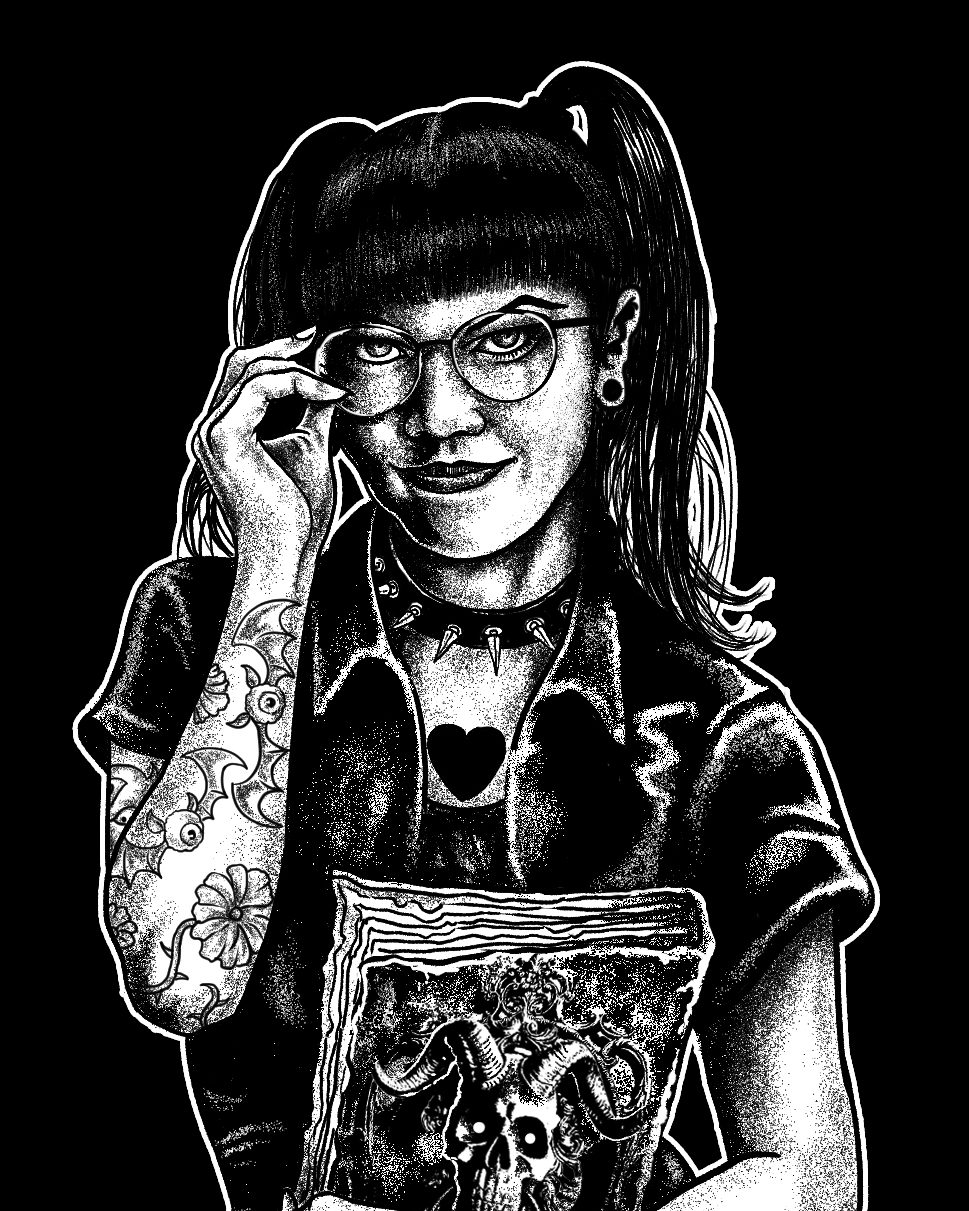

GREETINGS, BOOKWORMS! I’m Aisha Kandisha, Head Librarian at Kandisha Press. Join me in the dusty stacks of the library I will never leave again as I chat with some of my favorite Women in Horror. Today we feature author Demi-Louise Blackburn!
Demi-Louise Blackburn is a dark fiction author from a small, tired town in West Yorkshire, England. Some of her morose tales have found homes with the likes of Kandisha Press, All Worlds Wayfarer, Ghost Orchid Press, and The Future Dead Collective. For inquiries, find her at demi-louise.com or contact@demi-louise.com
What made you want to become an author? Did you have an “Aha!” moment when you knew you were born to write? Or perhaps a beloved book inspired you?
Writing’s been present in my life as far back as I can remember, which is odd because no one in my immediate family showed any real interest in it. Books were reserved for holidays abroad to pass the time around the pool, and that was about it, but I always felt glued to them. I was a painfully shy kid, so I think a book was an excellent thing to anchor onto when you wanted to be left alone without being thought of as rude.
Trying my own hand at writing was just a natural result of never being without a book, I think. Being an author to any degree was a want that ebbed and flowed with me just as any other interest in my life. It was my thing.
I suppose one moment that stands out, though, is encouragement from one of my primary school tutors. I used to help her out with the scholastic book club brochures, and she got me a book or two occasionally so long as I promised to read them and tell her what they were like. (One I can remember clearly was a book called Chinese Cinderella by Adeline Yen Mah. God, did that book break my heart!)
When I left to move up into high school, she wrote me a farewell card which has always stuck with me. I’ve lost it through house moves and general clear-outs at home unfortunately, but I’ll always remember the little: ‘I can’t wait to see the first book you publish’ nestled right before the ‘good luck!’
Sweet affirmations like that go a long way when you’re little. I reckon that’s as good a lightbulb moment as any.
What do you believe are your strengths in writing? And when you feel you need to improve on a particular writing skill, how do you go about it?
One comment I get often is about imagery and, recently, the authenticity of my characters. A lot of my work is steeped in rich, but grotesque language, and I utilise environments just as much as the characters to create the plot and feel I want. I think you can tell when reading just how much fun I have creating atmosphere and painting surreal moments, and enthusiasm always shines through into the writing.
Character-wise, a lot of my strengths come from the simple fact that I’ll refuse to keep interactions, dialogue, or the character itself if they feel like someone I’d watch on television. If I can’t truly place them in my life or imagine bumping into them and having those exact same dialogues, I can’t stand it. It can lead to a lot of second-guessing during drafting, but I think it’s worth the hassle. It means that my stories can remain bizarre, but still human.
When I notice a particular skill I’m not quite getting to grips with, the first thing I do is start reading again, but pointedly. I’ll sift through authors or stories I’m trying to align with and make notes of how they’re tackling the issues I’m having. It doesn’t even have to be a full novel, or even a full story. Just skim through scenes that are hitting the marks you want to hit and try and unpick how they’re doing it.
Outside of that, I highly rate diving into feedback. Not just getting others to give feedback on your work, which goes without saying is vital, but taking a critical eye to other’s stories as well. It’s a brilliant way of identifying where you can offer advice, but more importantly, what others are tackling far better than you. Some might think it would leave you disheartened, but I find it incredibly motivating, and it helps you identify your own teething pains.
What are your thoughts on the book industry today, or more importantly, about the book community? Do you feel it is getting harder or easier to make it as an independent author these days?
I feel like there’s so many different avenues and double-edged swords to this one. I definitely believe it’s easier to get your foot in the door and there’s a lot more transparency and insight given out by the community on how things work. Plus, you need only scroll on social media to see how many independent publications are opening, how many authors are opting for self-publishing and taking their work into their own hands, seemingly endless submission calls to take a jab at.
But in the same breath, once you’ve gone through the threshold, the book industry is still competitive and difficult to crack. I don’t think this industry will ever be easy just because of the sheer nature of it, just like any other creative pursuit. I still think a lot is down to an incredible amount of time, hard work, and sacrifice–and still a good dollop of luck. There are thousands of brilliant voices out there but getting them all heard remains a challenge. We’re just lucky that for all the hassle social media can bring, it does let us cast the net a bit wider.
Tell us about your work. What story are you most proud of?
A lot of my work I think just boils down to taking my own fears and experiences, and finding a way to make such boogieman out of them that the source appears ridiculously meek. Or, writing ways to get over those feelings but having that as the horror itself – change. A lot of my work has moments of metamorphosis, which free the antagonist and ruin them in the same breath. A neglected wife escaping her husband by a luring call from the ocean, a depressed college student allowing herself to become a monstrous host to a community of ladybirds to feel less lonely, teenagers on the cusp of adulthood retreating to childhood haunts which consume and remake them.
One tale that’s still one of my favourites was actually published with Kandisha Press, in The One That Got Away. When I wrote and got to publish Call of the Tide, it was a definite turning point where I felt as though I’d found the voice I wanted. It was lean, lyrical, atmospheric, tragic, and in the end quite grotesque. I’ve been trying to seek that high ever since.
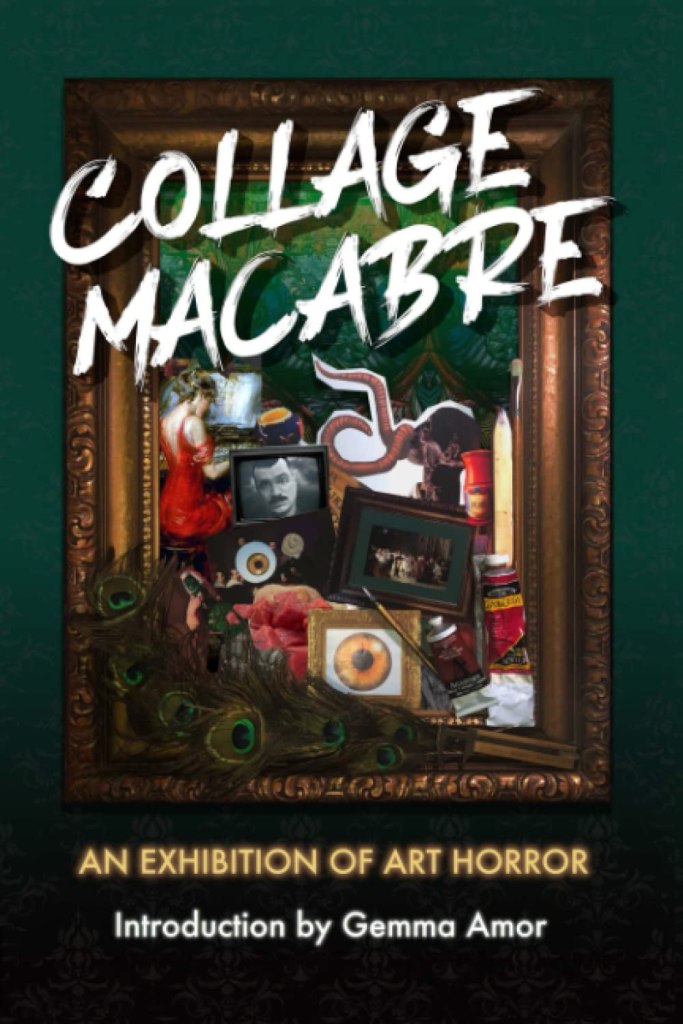
Another close one was Josie which ended up finding a home in Collage Macabre. It’s 2nd person, gritty, but weirdly beautiful. It’s one of those stories that helped me learn to accept that even work we love and have infinite fun working on, just by its nature, it’s not going to be everyone’s cup of tea– and that’s more than fine. I loved every second of picking at that weird story.
What are your upcoming works and plans for the future?
I have an upcoming piece due to be published in an anthology with Salt Heart Press (@SaltHeartPress) this coming May.
The story is The Rotten Cradle, and while it’s full to the brim with ooey, gooey body horror, it’s also steeped with a lot of personal grief of having to experience the gradual decline of a loved one in my family.
The anthology itself is a wonderfully dreadful exploration of human anatomy, with each author breaking, bending, and recasting their chosen body parts under the horror umbrella. I’m extremely excited for it to come out. The artwork, presentation, and stories combined are simply stunning.
Aside from that, while I can’t mention many concrete details yet, I’ll also have another short due out which combines a crippling sense of nostalgia and the primal, haunting fear of liminal spaces. It’s lotsafun.
Outside of that, I’m simply taking my own advice a little more. Read, write, feedback, rinse, repeat, see where the waves carry me out, when and where they bring me back, and try not to get too distracted in the meantime.
 KANDISHA PRESS