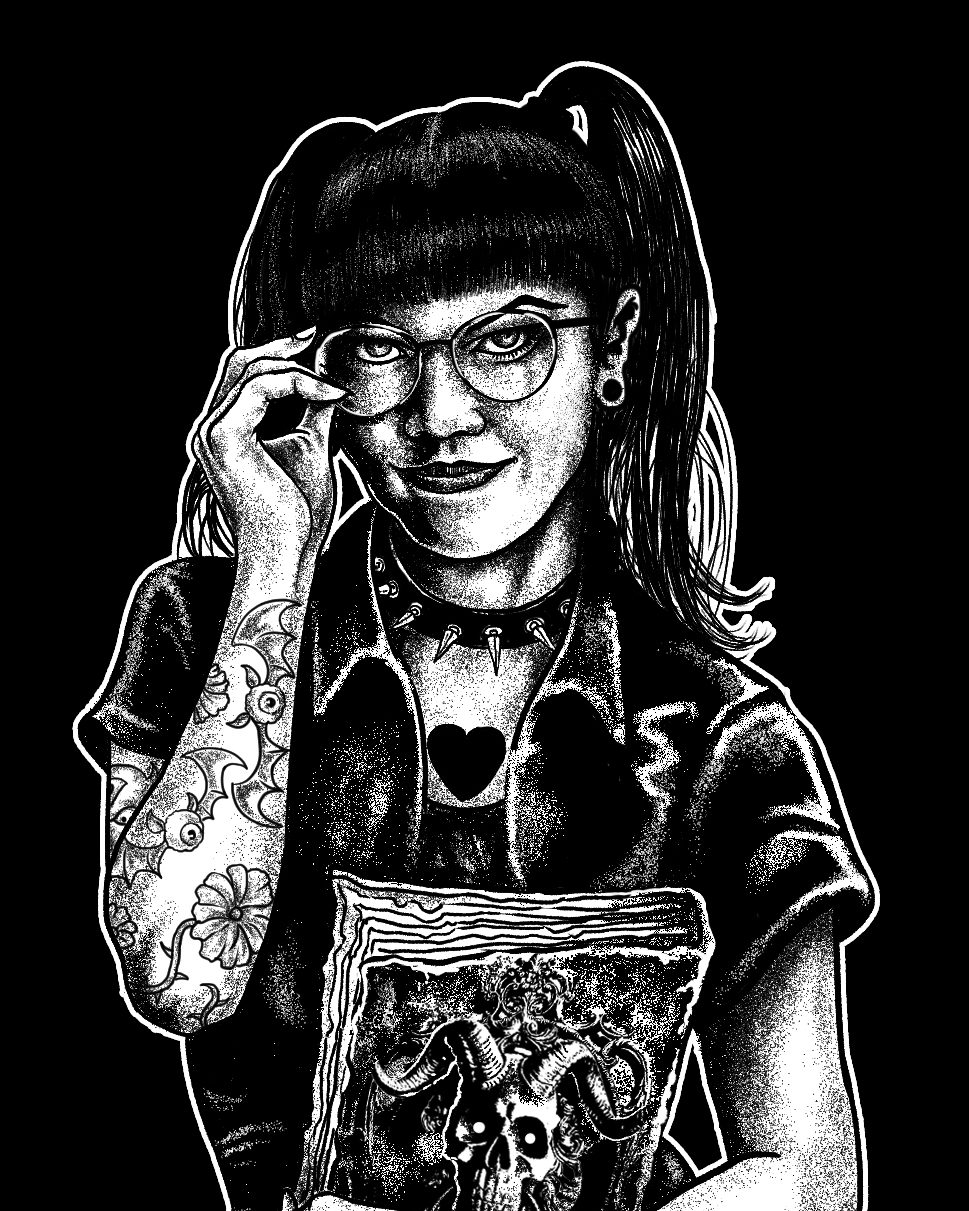

GREETINGS, BOOKWORMS! I’m Aisha Kandisha, Head Librarian at Kandisha Press. Join me in the dusty stacks of the library I will never leave again as I chat with some of my favorite Women in Horror. Today we feature author Alex Grehy!

Alex Grehy (she/her) is a regular contributor to The Sirens Call and to the Ladies of Horror Flash Project. Her work has been published in a range of zines worldwide including Luna Station Quarterly and Aphotic Realm as well as anthologies published by Water Dragon Publishing and Red Penguin. Her essays on being a “Lady of Horror” have featured in the Horror Writers Association Newsletter and The Horror Tree blog. She is recognised for her original view of the world, expressed in vivid prose and thought-provoking poetry.
Twitter: @indigodreamers
Facebook: alex.grehy.7
Blog: http://idealreaderblog.wordpress.com/
What made you want to become an author? Did you have an “Aha!” moment when you knew you were born to write? Or perhaps a beloved book inspired you?
Such an interesting question, and on reflection, I think I’ve been a writer since I first learned to hold a pencil. I grew up in a very tiny rural village and was inspired by my surroundings – being an only child with a prodigious imagination, the natural world was full of wonder and magic. I was a prolific writer up until the day I graduated from university.
Sadly, my first ‘Aha!’ moment came in early adulthood when I decided NOT to write any more. I was young and ambitious and believed that I needed to sweep away any creative fripperies, like writing and music, in favour of a corporate career. I don’t have any headspace for regrets, but every now and then I shake my head at the folly of my past self. However, I made a promise that I would come back to writing when I retired with the modest thought that I would one day publish a small volume of poetry.
Luckily, my second ‘Aha”’ moment came back in 2017 when the arts club at the hospital where I was working ran a short story competition. I had a sudden impulse to enter and started making promises to myself – if my story, The Midnight Bakers, was recognised by the judges, I would continue to write. I then promised to create an author blog/website and start to reach out to readers who could give me feedback on my early writing. However, I also made a more ominous promise – if the judges did not rate my story, I would give up on writing FOREVER! The idea that I should be so absolute in my thinking gives me the shivers now. Fortunately the story got an honourable mention, and I stepped back into writing some fifteen years before my retirement. I’m so glad I did because now my head is full of ideas, and I only have so much life left to get them onto the page.
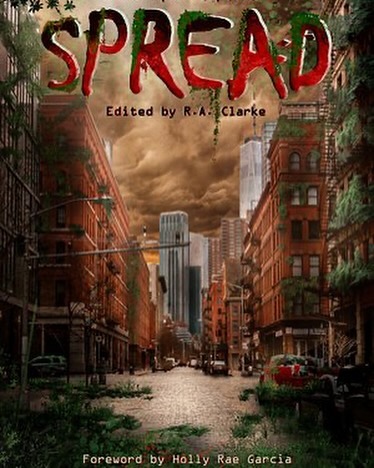
Check out Alex’s story in the SPREAD Anthology! For a bit more info about it, head over to https://wordpress.com/post/ideal-reader.blog/95
What do you believe are your strengths in writing? And when you feel you need to improve on a particular writing skill, how do you go about it?
In prose, I think my strength is that I always know my characters really well. In my mind, their thoughts and actions come from deep roots and have an internal logic. I’m also blessed by a brain which always delivers the ending first, whether that’s a story or a poem. I’m a fast writer, especially poetry, and live by the premise of “it’s more important that it exists than for it to be good”. ‘Good’ can come later in the edits.
I’m at the stage of my life where I’m concentrating on ‘learning by doing’. This means setting monthly writing goals and getting words on the page. But I couldn’t do that without a great accountability partner and the support of a wonderful online community of writers. The greatest driver for improving my writing is now a superb team of beta readers who help me to shape my words, line-by-line, stanza-by-stanza, story by story. I also learn a lot from beta reading other authors’ works – it’s a privilege to delve into their craft and reflect on my own writing as I do so.
I mentioned that my brain always supplies the ending first, and that I always know my characters really well. This creates real problems for me at the beginning of stories. I could write my characters from birth, but I’m committed to writing short fiction, so I can’t be penning brick-thick century-spanning sagas. This is where beta readers are invaluable because they can look at my drafts (some more polished than others) and tell me where to start, before asking questions that identify gaps in my narrative. When my beta readers start to disagree with each other, then it’s time for me to write “The End” and get the draft into the world.
What are your thoughts on the book industry today, or more importantly, about the book community? Do you feel it is getting harder or easier to make it as an independent author these days?
That’s a difficult one to answer. To some extent it depends on your definition of “made it”. I have weeks when I think I’ve “made it” if any words move from my brain to the page (I like to celebrate wins, no matter how tiny). But if you measure success by financial gain, then it’s more tricky – particularly with short fiction.
As an author I have my fair share of rejection emails sitting on my laptop – developing that thick skin and ability to bounce back is as much of a writing skill as the use of metaphor. But getting published by third parties is a slog – working out the minutiae of each publisher’s submission requirements, long waits for replies and an inevitable crop of rejections can really sap your energy. I have a particular dislike of pompous or patronising gatekeepers who stand between me and my readers.
That’s a part of the book community that I detest. I’m sure there are many fledgling authors, wildly talented individuals, who have been knocked back by dismissive or even cruel rejections. Fair enough, I accept that rejection is part of the game, but no-one has the right to trample on an author’s dreams.
However, the openness of social media has given us a range of platforms for sharing our words. I’ve gained a lot of confidence from joining initiatives such as the Ladies of Horror Flash Project. We write to monthly picture prompts and there is no gatekeeper, which is both terrifying and liberating. An acceptance from a traditional publisher gives a heady rush of external validation. But I believe there is a greater power in self-validation, having the confidence to stand by your writing and put it into the world.
I’m inspired by the growth in self-publishing. It’s a route I’m intending to take with my own chapbooks and collections. However, the writing is hard enough, but then the mechanics of editing, formatting, commissioning artwork and marketing is pretty daunting. But this is the way forward. Although our words may be farmed by AI (grrrr!), the only way we can flex the power of human creativity is by getting out there.
Tell us about your work. What story are you most proud of?
I like quick wins, so I’m committed to writing short fiction and poetry. I’m still exploring my capabilities at the moment and am trying hard not to confine my thinking with hard boundaries on form or genre. Having said that, I always expected to be a nature poet and I’m still blown away by how much I enjoy writing horror.
I’m proud of every word that I’ve written, the published and unpublished; the blobby drafts and the mysterious prompts I jot in my notebook that might become something one day. But my standout story is The Hunted, published in The Sirens Call in June 2019. It’s special on so many levels – it was the first horror story I’d ever written and my first published work. Being published helped me to understand what I need from publishers. I value relationships and The Sirens Call family has taught me how to work with editors in a mutually respectful way. I’m very fortunate that since 2019, my work has been widely published in a range of anthologies and ezines. But I always get the most satisfaction when I feel a sense of connection with the publisher.
What are your upcoming works and plans for the future?
My biggest plan for the future is to self-publish at least one poetry chapbook. That’s a lifetime ambition and would fulfil that promise I made to myself when I gave up writing as a young adult. I’m a prolific poet and have tons of material – time to put it to work.
Where I’m standing now as an author/poet is entirely down to the support and encouragement I’ve received from my writing communities. I’m committed to paying that back (or forward) and am aiming to be a role model for aspiring writers. Which sounds rather grand, but it quite simply means not giving up. It’s a hard road. Sometimes you need a prod, sometimes you need honest feedback, but often you need a big mama bear in your corner having a rant at the universe on your behalf. If I can be any of those to my author buddies, then I’ve definitely ‘made it’ in writing.
I have a regular goal to write for the Ladies of Horror Flash project every month and I’m determined to submit to every edition of The Sirens Call until they tell me to go away! I’ve also got a few favourite writing contests that motivate me to write new materials and I maintain a monster spreadsheet of submission opportunities. There are many reasons why authors don’t get their words in print, but lack of openings, especially in short fiction, is not one of them.
I can’t control whether or not my work gets accepted, but I can control the quantity and quality of what I submit, so ONWARDS!
 KANDISHA PRESS