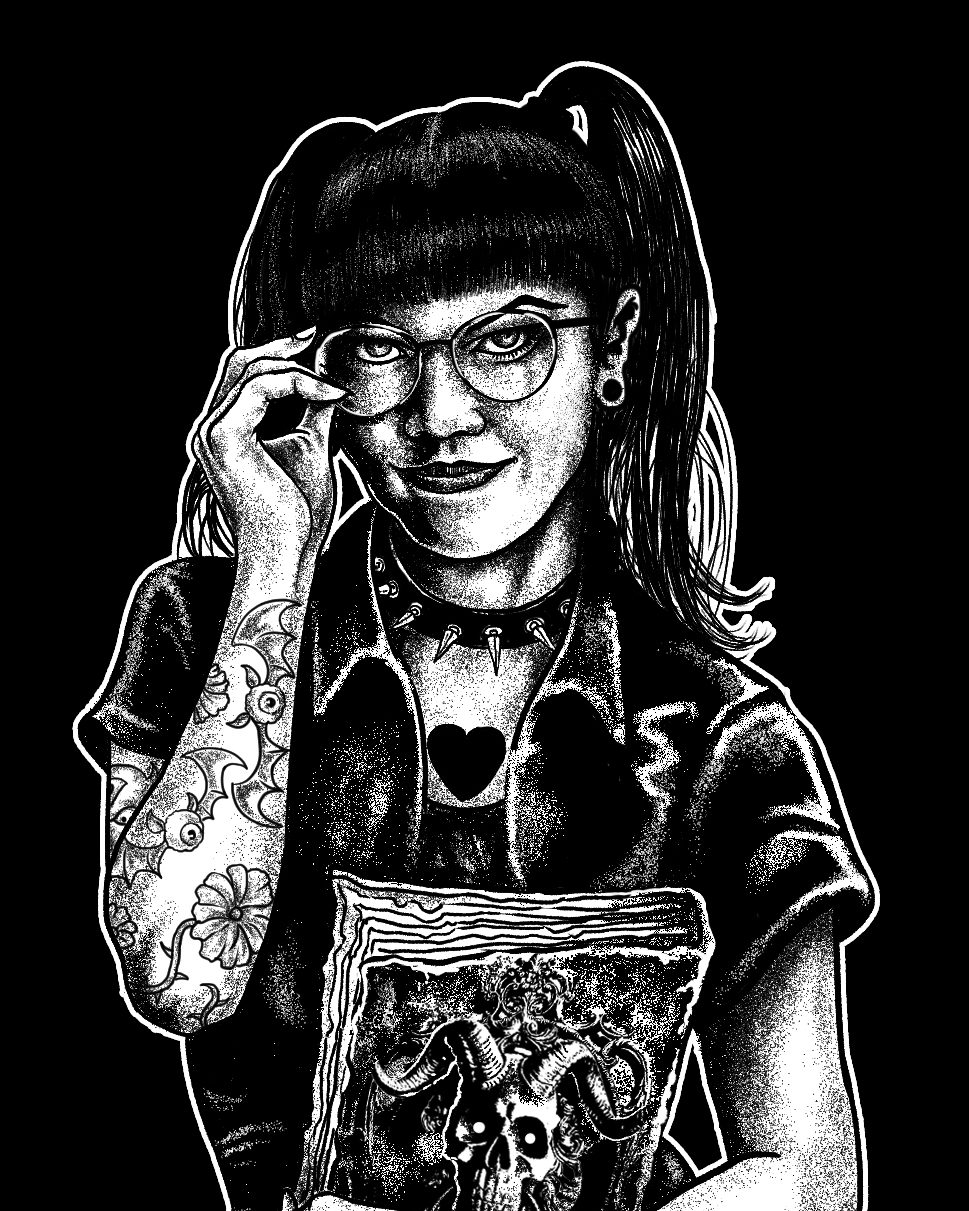

GREETINGS, BOOKWORMS! I’m Aisha Kandisha, Head Librarian at Kandisha Press. Join me in the dusty stacks of the library I will never leave again as I chat with some of my favorite Women in Horror. Today we feature author Michelle Renee Lane!

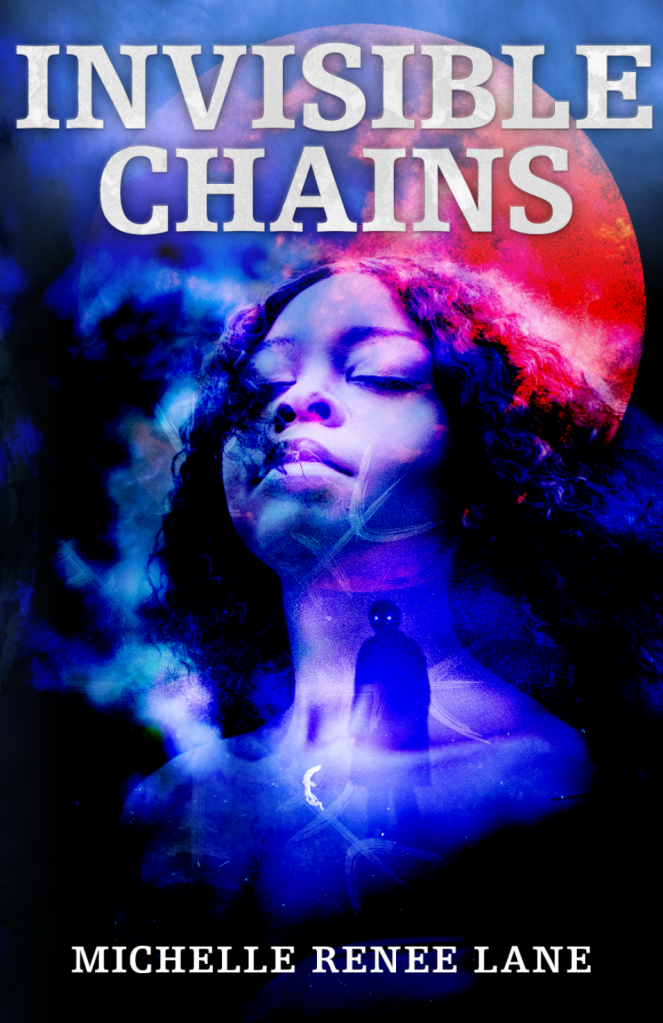
Michelle Renee Lane is a speculative fiction writer born and raised in the middle of nowhere Pennsylvania. She misspent her youth consuming vampire fiction, climbing into strangers’ cars, exploring abandoned buildings, reading Tarot cards, dropping acid, befriending skaters and skinheads, and consulting the dead with a Ouija board. Michelle writes cautionary tales about the perils of falling in love with monsters. Her short fiction appears in several anthologies, and her Bram Stoker Award nominated debut novel, Invisible Chains (2019), is available from Haverhill House Publishing. The Spanish language translation, Cadenas Invisibles (2022), is available from Dilatando Mentes Editorial. Book one of her erotic paranormal romance series, The Courtship of Nora Fagan (2022), is available from Stardust Romance. She holds an MFA in Writing Popular Fiction from Seton Hill University.
What made you want to become an author? Did you have an “Aha!” moment when you knew you were born to write? Or perhaps a beloved book inspired you?
I’ve always loved stories. Hearing them, reading them, watching plays, movies, and TV shows, so writing them seemed natural to me. I kept a notebook full of stories, thoughts, poems, and an unhealthy amount of Duran Duran fan fiction when I was a teenager. People still remember that notebook and ask me if I still have it. I don’t, but even if I did, I’d be too embarrassed to share what I found in those spiral-bound pages.
Writing was a way for me to communicate and make connections when I was younger. It’s still helping me to do that. Sharing my stories helps me understand myself and the world around me a bit better. Writing is an act of catharsis for me. It releases my demons and makes me a stronger person. Recently, I was interviewed for a podcast and the interviewer told me my novel, The Courtship of Nora Fagan, made her feel seen. If I only reached one person with my writing that might be enough, but hearing from readers – friends, family, and strangers – that my work has made them think about the world a little differently and question who they are, that’s why I’m writing. To make positive changes for myself and hopefully for my readers.
What do you believe are your strengths in writing? And when you feel you need to improve on a particular writing skill, how do you go about it?
I often think it’s easier to point to the things I struggle with rather than my strengths in most things, but I think that’s especially true of writing. We all have things we need to improve on like avoiding our crutch words, or the desire to info dump or rely on exposition to tell our stories rather than strengthening our characters through dialog and deeper POV.
I’m more of a pantser than a plotter, so I begin a story wherever the story starts in my head. That could be a snippet of dialog, a few lines of narration about a character that popped into my thoughts, or a problem I want to explore (ripped from the headlines). Sometimes scenes will present themselves fully formed in my head while I’m doing something else like driving or washing dishes, and the challenge is to get that scene onto paper the way I imagined it. That’s obviously harder than it sounds, but one of the things I try to do is to record those thoughts on my phone and come back to them later when I sit down to write. Saying the words aloud helps solidify the scene in my head and listening the recording makes it more concrete when I finally attempt to write it.
I try to avoid outlining because it often slows down my creative process. However, when writing longer stories, especially novels, sometimes I’ll hit a wall while I’m writing that pesky middle part of the book and two things I do (and encourage my students to do) is to do a brain dump – outline from the point at which they got stuck and try to solve the problem. Do I need to know more about my characters? Is there enough conflict? Are the stakes high enough? How can I make my characters suffer more? It doesn’t have to be a perfect solution for the first draft, but brainstorming, either alone or with other writers, can really help you get unstuck. Another thing I recommend when you’re stuck in the middle of your story is to write an ending or two. Again, while you’re writing the first draft the ending doesn’t have to be perfect. In fact, it doesn’t even have to be the ending you choose in the final draft. But writing an ending can give you a goal or landmark to write toward as you’re trying to solve the problem of “what happens next” in your story.
What are your thoughts on the book industry today, or more importantly, about the book community? Do you feel it is getting harder or easier to make it as an independent author these days?
I’m not going to delve into my opinions about the book industry or community per se, but I do want to talk briefly about the impact of social media on both. Social media can be an excellent tool for writers to connect and build community. It’s a great way to promote your work, promote the work of other writers, and show your support for your communities of writers in different genres, geographic locations, etc. It is also one of the primary ways to hear about publishing opportunities for independent writers. Unfortunately, social media can also work against people by creating a sense of isolation (alienation) or an intensely overwhelming pressure to maintain a digital footprint. Not to mention the emotional turmoil it can create for some folks. Remember, the images you see online don’t have to be AI-generated to be false representations of someone else’s reality.
Social media can bring out the best in people and the worst. Use it with caution. Be kind. Listen to your gut. Avoid conflict with mean-spirited people when you can. Try to have empathy for others but understand that if people cross your boundaries and behave in ways that make you feel unsafe, you can block them or unfollow their content. Stay safe out there.
Tell us about your work. What story are you most proud of?
The story I’m most proud of is Invisible Chains. Not only because I have that novel to thank for much of my success as a writer so far, but also because it was that novel that put me back on my path of being a writer. I wrote Invisible Chains as my thesis novel for the MFA in Writing Popular Fiction Program at Seton Hill University. That novel represents the risks I took to improve the quality of my life and to reclaim my creative energy. Earning an MFA has opened many new opportunities for me and the benefits of that experience are still having a positive impact on my life. I never expected to write something that would literally change my life, but writing that novel was a labor of love and required me to face challenges that made me a stronger person and writer.
What are your upcoming works and plans for the future?
I’m currently working on edits for the follow up to The Courtship of Nora Fagan, which is book 2 of the A Marriage Made in Hell series. And last year I wrote 50,000 words during NaNoWriMo, which was the first draft of the sequel to Invisible Chains. I’ll be focusing on those projects over the next few months, but I have a few other irons in the fire, so stay tuned.
 KANDISHA PRESS