
GREETINGS, BOOKWORMS! I’m Aisha Kandisha, Head Librarian at Kandisha Press. Join me in the dusty stacks of the library I will never leave again as I chat with some of my favorite Women in Horror. Today we feature author Stephanie Parent!
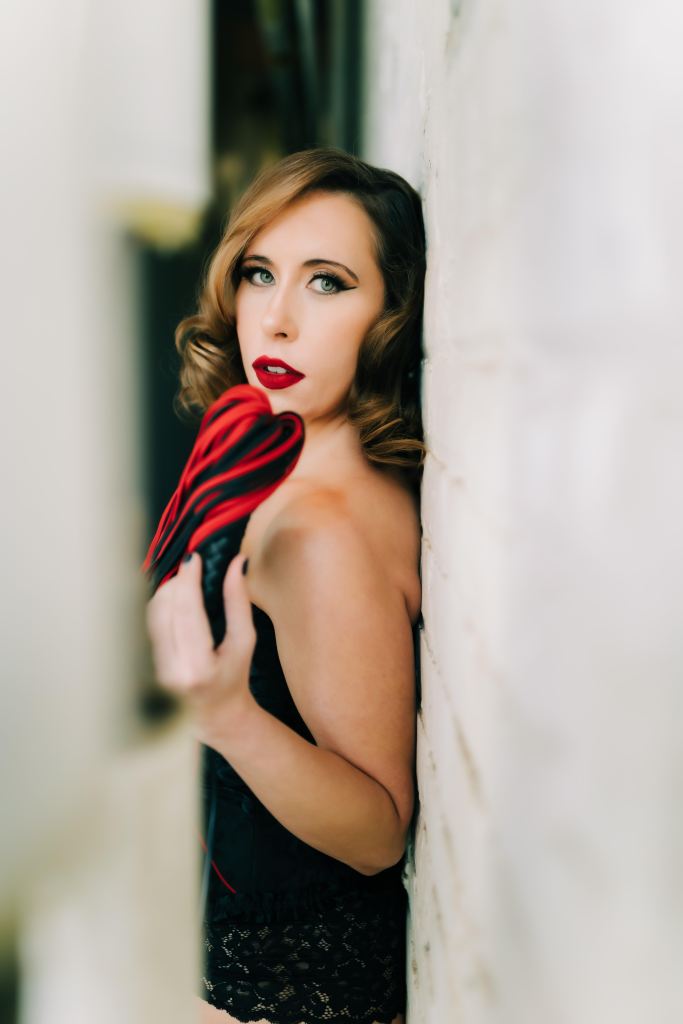
Stephanie Parent is an author of dark fiction, nonfiction and poetry. Her debut novel The Briars was published by Cemetery Gates Media, and her debut poetry collection Every Poem a Potion, Every Song a Spell was published by Querencia Press. Stephanie spent much of her adult life in Los Angeles, but has now returned to Baltimore, Maryland, where she was born and raised.
What made you want to become an author? Did you have an “Aha!” moment when you knew you were born to write? Or perhaps a beloved book inspired you?
I was a reader from a very young age—I loved the way books transported me to different worlds, and I devoured everything from fairy tales to historical fiction. I especially relied on the emotional connections and catharsis I gained from reading. As an introvert who had difficulty relating to children my own age, I needed books to tell me I wasn’t alone and that others felt the same way I did. Based on how much I read, becoming an author just felt like a natural career path. However, I am a perfectionist and find writing very difficult, so it hasn’t always been an easy journey for me! At this point I try to treat writing as a passion I indulge when I am inspired or in need of emotional release, rather than a career or something I have to do every day.

What do you believe are your strengths in writing? And when you feel you need to improve on a particular writing skill, how do you go about it?
In my fiction writing, I’m a very character-driven writer, so my strength is creating three-dimensional characters that feel like real people—characters that readers can come to know and care about over the course of a novel. In my poetry, fiction and nonfiction, I also write with a poetic style and a lot of references to myths and fairy tales, so that can be gratifying to readers with similar tastes. I try to improve on my skills by recognizing what I could have done better in previous works, and being very intentional when I write something new. I am not a sloppy first draft person—I write slowly, thoughtfully and carefully—so I like to be aware of any potential issues and of what I’m hoping to accomplish from the beginning of a project, even if it makes the writing process slower.
What are your thoughts on the book industry today, or more importantly, about the book community? Do you feel it is getting harder or easier to make it as an independent author these days?
I think the answer to this depends on your definition of “making it.” If “making it” includes having a wide readership, a large number of books sold and financial success, then it is definitely getting harder. There is just so much noise on social media, and so many authors writing and trying to be heard, that it can seem like shouting into a void. It’s not easy to sell enough books to contribute to your income, or to become well known within the wider literary community.
However, if you are writing in a specific niche, social media and independent publishing/small presses can be a godsend. Work that a big publisher would never take a chance on can now get out into the world and be marketed directly to readers who are looking for it. Authors from marginalized groups can particularly benefit from connecting with readers directly through social media. Going indie is a great alternative to dealing with big publishers that, even when stating they are more inclusive, can still demonstrate quite a bit of prejudice.
Tell us about your work. What story are you most proud of?
I write nonfiction, fiction and poetry. A lot of my recent work has focused on sex work, since I worked at a commercial dungeon in Los Angeles for six years. I fell into writing about sex work almost accidentally—I had an offer to publish an article about working at the dungeon, and the way the article was edited to make my experience appear more negative, and the resulting backlash I received, opened my eyes to some harsh realities. Publishing that article made me realize how many misconceptions exist about sex work in our society, and how deep the stigma is against it. As a result, I wanted to write books that would accurately reflect my experience and those of my fellow workers. I’m probably most proud of my gothic horror novel The Briars, which is set in a dungeon like the one I worked at, but also incorporates traditional ghost stories about women “othered” because of their sexuality.
What are your upcoming works and plans for the future?
My nonfiction chapbook about working at a commercial dungeon, My Dungeon Love Affair, will be released on June 11, 2024 from Stanchion Press. While the book is not horror, it certainly describes some horrifying (and true!) situations as well as some beautiful ones. It’s my first longer work of nonfiction and it’s a bit scary to publish, so I really hope readers will check it out and make the risk I’ve taken worthwhile! I also have a poetry collection, Cinder Girl Grows Wings, coming from Curious Corvid Publishing in 2025. Like my previous poetry collection, this one explores the dark side of fairy tales for a fantastical, horror-tinged experience. After that, I’m not sure what’s coming next, but I will be sure to keep readers updated on my Twitter and Instagram, both @SC_Parent.
 KANDISHA PRESS
Sounds like the real deal with 50 Shades on the side.
LikeLike