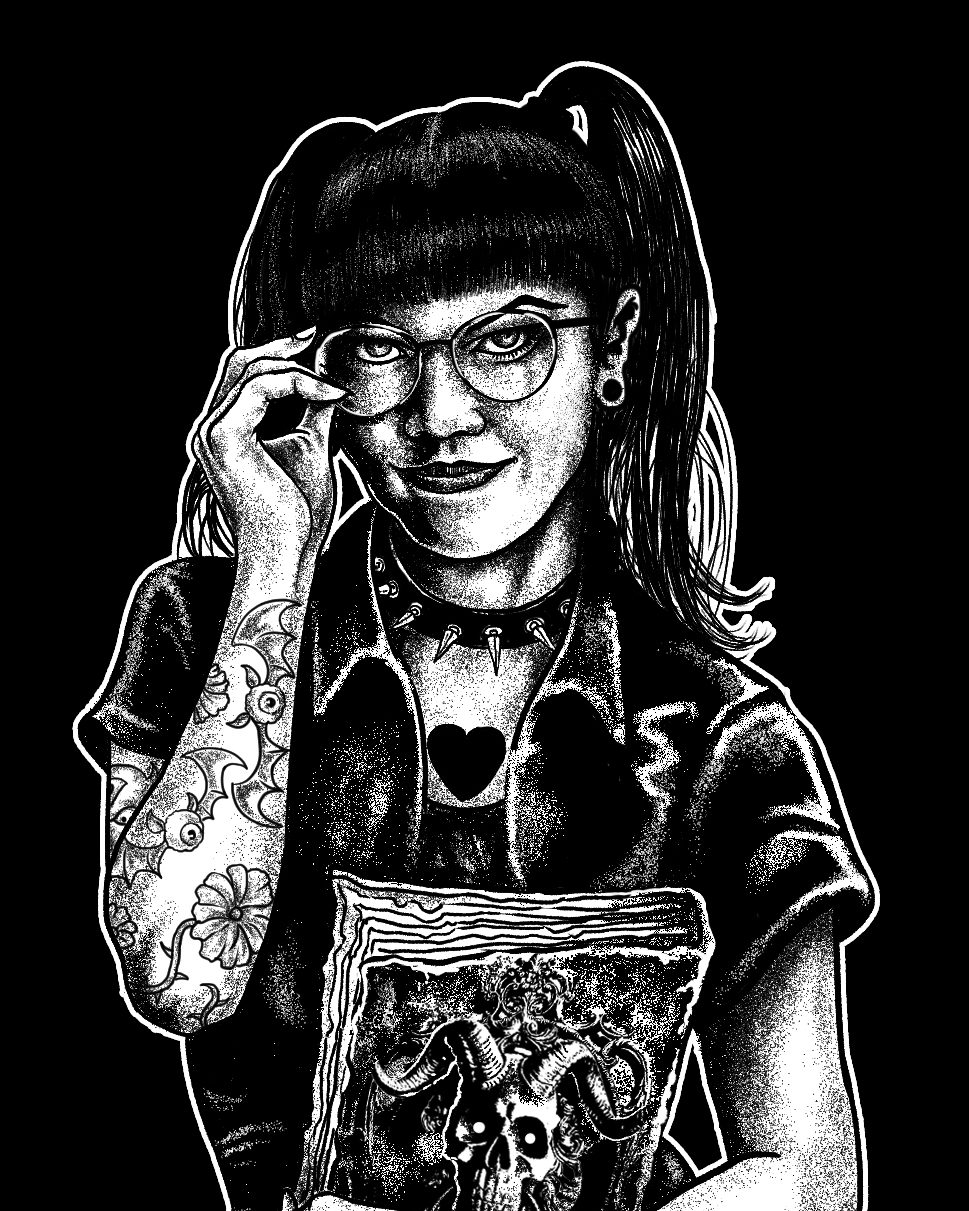

GREETINGS, BOOKWORMS! I’m Aisha Kandisha, Head Librarian at Kandisha Press. Join me in the dusty stacks of the library I will never leave again as I chat with some of my favorite Women in Horror. Today we feature author River Lazarus!
River Lazarus is a writer from Sydney, Australia. She has been writing short horror stories since the age of 8, when she first watched the film adaptation of Stephen King’s ‘Christine’ with her dad and decided to write a sequel. She enjoys exploring the intersection of gender, sexuality, culture and body-horror in her writing.
What do you believe are your strengths in writing? And when you feel you need to improve on a particular writing skill, how do you go about it?
Like many writers, I think I have a particularly vivid imagination. I have always found my ability to completely picture a scene in my mind as I’m writing it very useful when I’m considering what my characters are seeing, hearing, smelling, feeling etc. Also, despite my perfectionism (another trait common to writers!), I’ve always been glad that I can almost surrender myself to the flow of the writing process when necessary. I try not to plan too strictly what I want to say within a particular part of a story and let a bit of improvisation and ‘in-the-moment’ creativity to lead me, especially in an initial draft.
With regards to improving my writing skills, I’ve always come back to the belief that reading widely – across genres, authors, countries, languages – is the best way to force myself to notice my limitations as a writer and also forces me to improve my writing skills. Additionally, forcing myself to write often, even if the stories come out subpar, keeps the writing muscles growing!
What are your thoughts on the book industry today, or more importantly, about the book community?
I think we are in an interesting time for the book industry. We have phenomena like ‘BookTok’ which is creating an almost renaissance for interest of youth in books in the digital era, but I think at the same time this is creating a narrow understanding and perception around literature. I think a lot of popular literature among young people now is being driven by internet algorithms, which often support controversial and shocking stories. I think this could easily lead to publishers and authors favoring stories that are shocking or horrifying just for the sake of it, rather than to explore deeper and darker aspects of the human condition. Overall, I think stories have always been a part of humanity, and I think they will continue to be, but I think the form of these stories is changing drastically in the digital era.
Do you feel it is getting harder or easier to make it as an independent author these days?
Somehow both! There are some great literary journals out there now, and with digital distribution, there are so many opportunities to get your work out there. At the same time, there are so many incredible writers who want to get their work published, and almost an oversaturation of content. I think this is true for every creative industry right now; we have all the tools for success, but there are so many of us. With that being said, being a writer has always been difficult. We know most writers in the past (and present) have day jobs to support their writing. I think it’s just the nature of the work, and one you endure due to your love of the craft.
Tell us about your work. What story are you most proud of?
I think ‘Bousculade: The Big Machine’ (recently featured in PULP Literary Mag Issue 7: https://pulplitmag.com/#read ) is one of my favorite stories that I have written in a long time. When I read it now, I see that it is a real reflection of the state (and feelings) of isolation I was in when the story was written. I wrote the story a few months after leaving a PhD program and a few weeks later losing my job. All of that happening in a short time made me really contemplate what I was doing career-wise and in life in general. Naturally, I fell into writing as many stories as possible, and I noticed a common theme among them of characters doing whatever they could to facilitate some sort of connection with other people. Of course, all of these stories were quite dark and macabre, as I enjoy exploring that element of human nature, but the underlying pathos of all of these characters was that they felt they had been abandoned by others and the world more generally.
I also really love that story because I get to include a bit of my heritage and background in it. My grandmother is Belgian, and the French language and Europe in general is such a big part of how I understand who I am, so including that in my work is very important to me.
What are your upcoming works and plans for the future?
I’m currently working on a Novella, of which I am in the very early stages of drafting and planning. It’s set in the early 2000’s in a few different European countries and has some supernatural elements to it. I’m very excited to be working on a longer form of writing, after a few months of working solely on short stories.
 KANDISHA PRESS
Leave a comment