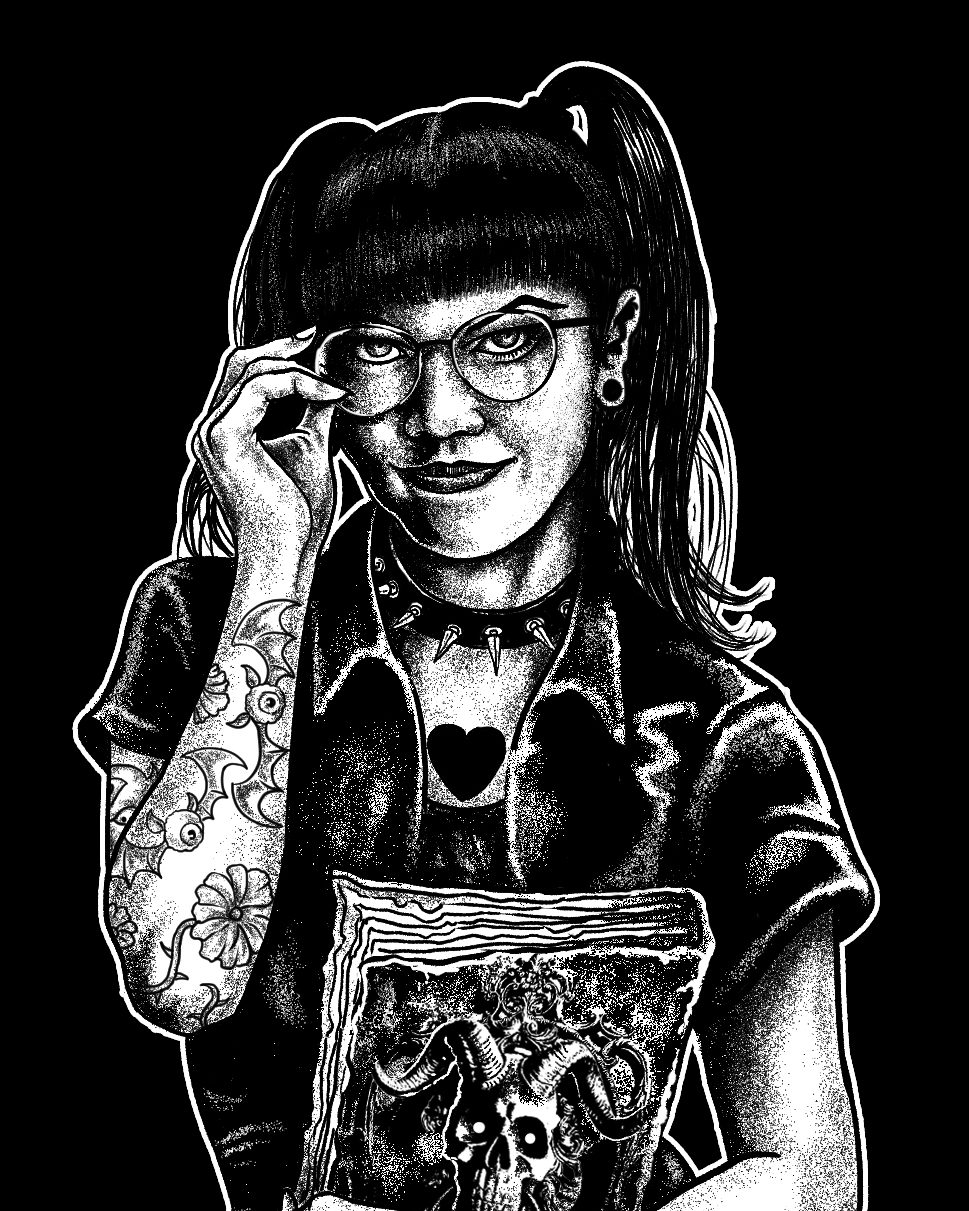

GREETINGS, BOOKWORMS! I’m Aisha Kandisha, Head Librarian at Kandisha Press. Join me in the dusty stacks of the library I will never leave again as I chat with some of my favorite Women in Horror. Today we feature author Jesse Weiner!

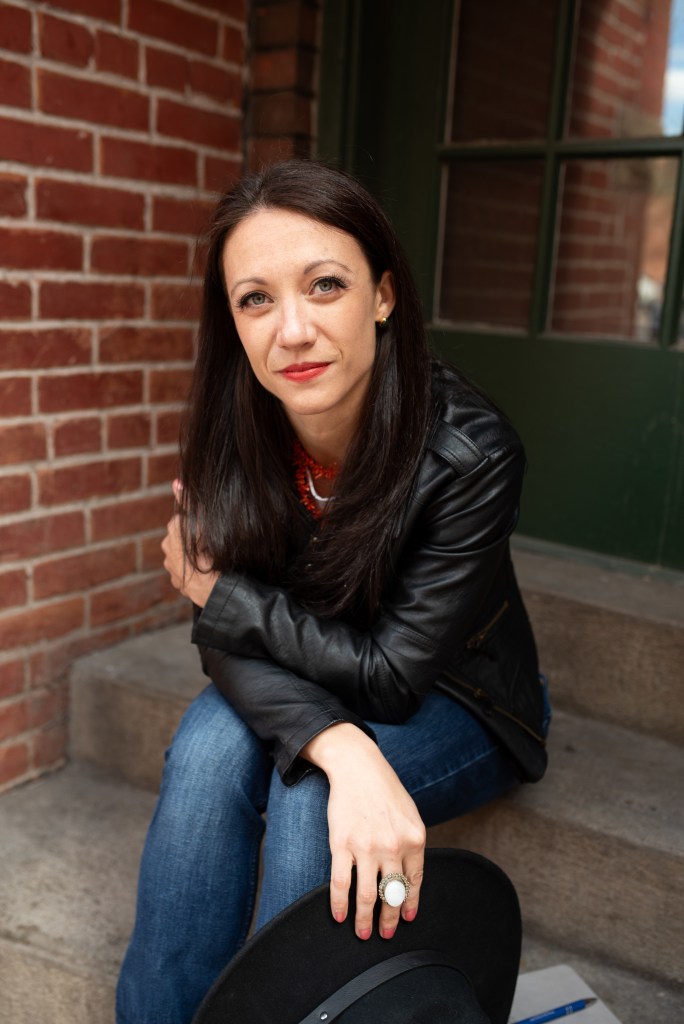
Jesse Weiner holds an MFA in Writing from the Vermont College of Fine Arts. A cross-genre author and poet, her work as appeared in places like The Saturday Evening Post, Cosmic Horror Monthly, and Poetry Hall. As a writing coach and developmental editor, Jesse’s craft articles regularly appear in The Freelancer, the members magazine for the Editorial Freelancers Association, and The Author, a craft magazine by The Pacific Northwest Writers Association. Jesse is also a judge for the popular online storytelling platform NYC Midnight and a Mentor through PEN America’s Prison and Justice Writing Mentorship. Visit InksationalEditorial.com to learn more.
What do you believe are your strengths in writing? And when you feel you need to improve on a particular writing skill, how do you go about it?
As a storyteller, two of my strengths are crafting settings and embracing revisions. For me, the first draft is always the hardest. But! Once I’ve struggled my way through and established the framework for my narrative, then I get to play, weaving in layers of nuance, deepening characterization, and adding a bawdy joke (or several) for good measure. Sometimes, revision can even mean reimagining my story (or my entire novel) until I unearth its true heart, after which I can tweak different craft elements to further highlight the themes my story explores.
On a nuts and bolts level, this means that for my first or second draft of a story, I write comments to myself as I work, inserting little reminders to pick up certain story threads later on or to strengthen certain craft elements in later drafts. For longer narratives, I also keep an editorial checklist. For my current WIPs, this includes my top frequently overused words, as well as questions like, “What are the emotional beats I’m supposed to hit in this chapter? Am I hitting them?”, and, “Is my writing balanced?” By this, I mean is there a healthy balance between descriptions, dialogue, backstory, etc.? If the pacing or content of a certain scene or even an entire chapter feels off, I can typically fix it by checking that I haven’t overused one craft element at the expense of another.
What are your thoughts on the book industry today, or more importantly, about the book community?
There are so many different ways for authors to find community and so many different writing communities (both online and in person) that provide great advice and support to their members. Obviously, scammers exists, so do your homework and check sites like Writer Beware before giving anyone your money. I’m a member of both the Editorial Freelancers Association and The Authors Guild, and I cannot say enough positive things about both communities. Both platforms provide ample opportunities for members to connect and interact, and both organizations put a premium on education, offering a ton of courses and workshops for their members at discounted rates.
Like many creatives, I’ve left Twitter and Facebook. Because social media can so often distract me from actual writing, I’ve actually shifted to connecting with folks via LinkedIn. As there are a slew of editors and traditional publishers in this space, I keep it 100% professional, limiting my posts to pub news, celebrating other authors, or sharing new craft articles.
Many folks in the KidLit community (of which I also count myself a member) have shifted to Bluesky, so if you’re also writing spooky stories for young readers (and by this, I mean picture books through young adult titles), Bluesky can be a great place to find community. Plus, if you’re missing the days of PitchWars on Twitter, I hear more pitching opportunities are popping up on Bluesky, too.
As an editor, I regularly work with Independently published authors. Some have worked their butts off to create their own communities; others have decided to work with hybrid publishers to support them on their paths to publication (and they still work their butts off to reach new readers). I also know a slew of traditionally published authors, and while they have the benefit of advances and a marketing team, depending upon the publisher, they may still be expected to do a fair amount of marketing themselves—of which building community is an essential part.
I realize “networking” has a scummy feel for some, but it’s only scummy if you make it that way, you know? Whatever pub path you choose, so long as you’re seeking to forge real connections with other writers and readers—which, for me, means seeking opportunities to pay into your community, placing supporting other writers above using social media as a sales platform—then the community you’ve created will support you in return.
Do you feel it is getting harder or easier to make it as an independent author these days?
At the moment, I’m choosing to pursue traditional publishing in large part because I am a slow writer. From what I’ve gathered from independently published authors, you can enjoy higher sales and a more engaged readership if you have more than one book to sell. For those focused on digital sales alone, this might mean choosing to wait to launch a series until you’ve written the first 2-3 books, thereby ensuring that if a reader loves your title, they can immediately buy the next.
For those worried about how AI might make it even easier to pirate independently published titles and/or use independently published works to train AI without an author’s consent—or compensation!— I highly encourage you to check out the AI licensing platform Created By Humans, which aims to protect copyright owners’ rights.
Tell us about your work. What story are you most proud of?
At the moment, I’m the proudest of one of my current WIPs. Originally a YA fantasy with strong horror beats, I’m currently in the process of aging up the story for the adult market, which means upping the horror factor while also strengthening the story’s central romance (and making it spicier, too).
What are your upcoming works and plans for the future?
I have a soon-to-be-published craft article on novels in verse and a handful of horror stories I’m looking to sell to various adult and YA markets. To that end, I’m working on a horror collection for adults, but I’d also love to write a collection of middle grade horror.
On the editorial side, I’d LOVE the opportunity to edit more horror, so please, if you’re looking for a writing coach or a developmental editor, don’t hesitate to reach out! I’d love to hear from you.
 KANDISHA PRESS
Leave a comment