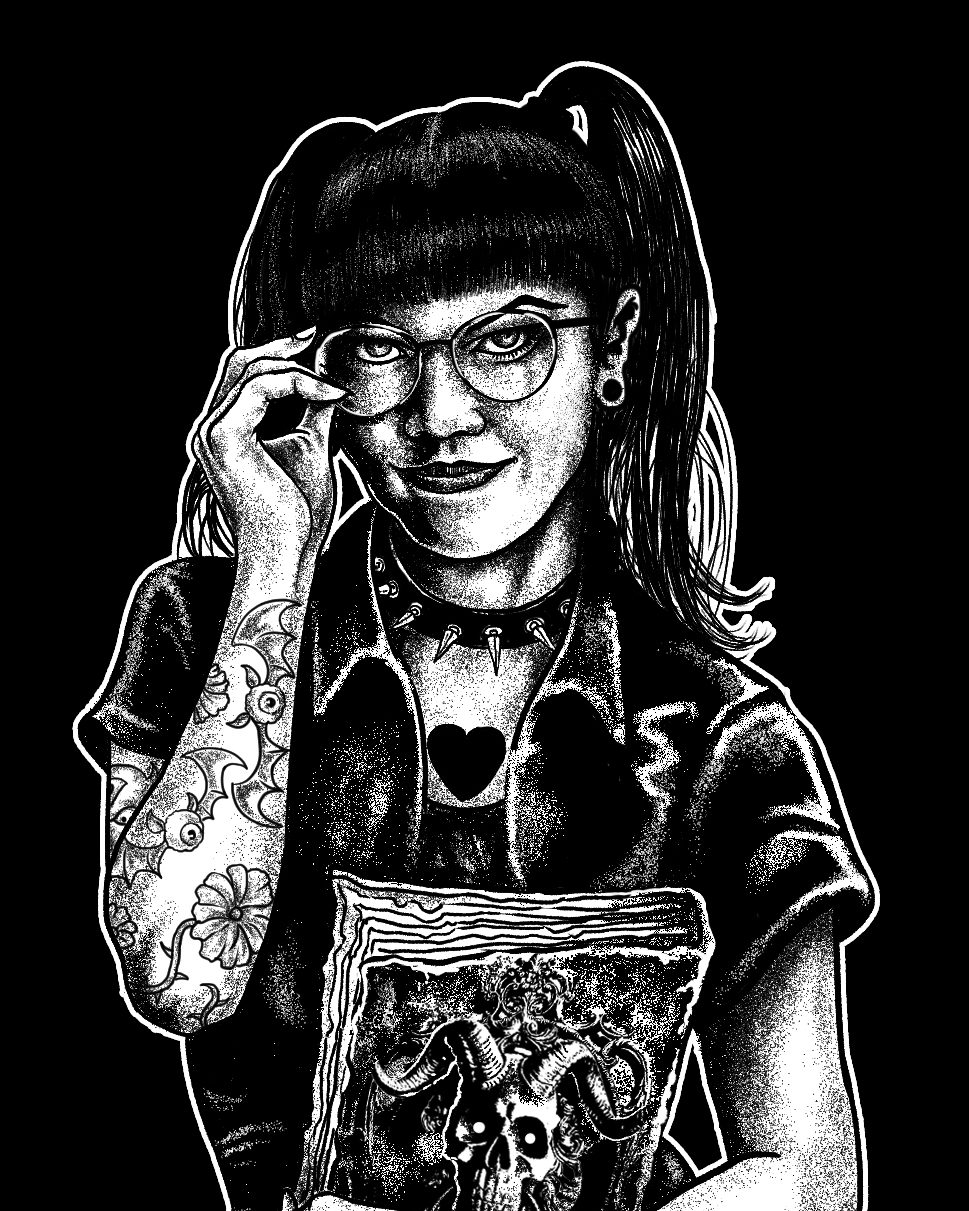

GREETINGS, BOOKWORMS! I’m Aisha Kandisha, Head Librarian at Kandisha Press. Join me in the dusty stacks of the library I will never leave again as I chat with some of my favorite Women in Horror. Today we feature author Catherine Cavendish!
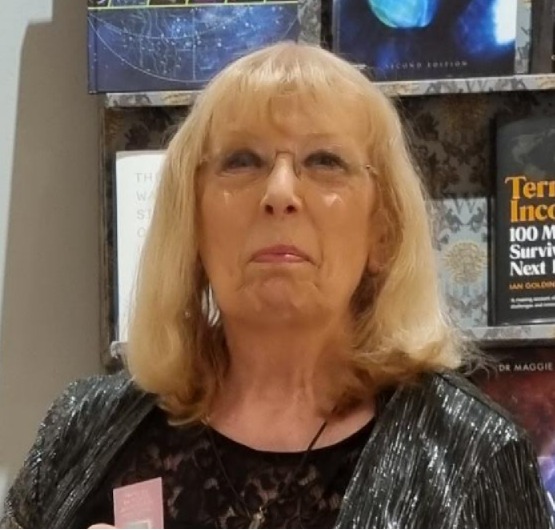
Following a varied career in sales, advertising and career guidance, Catherine Cavendish is the author of a number of supernatural, ghostly and Gothic horror novels, novellas and short stories.
Her novels include: The Stones of Landane, Those Who Dwell in Mordenhyrst Hall, The After-Death of Caroline Rand, Nemesis of the Gods Trilogy, Dark Observation, In Darkness, Shadows Breathe, The Garden of Bewitchment. The Haunting of Henderson Close, The Devil’s Serenade, The Pendle Curse and Saving Grace Devine.
The Crow Witch and Other Conjurings is a collection of her previously published and brand-new short stories.
Her novellas include: The Darkest Veil, Linden Manor, Cold Revenge, Miss Abigail’s Room, The Demons of Cambian Street, Dark Avenging Angel, The Devil Inside Her, and The Second Wife
She lives by the sea in Southport, England with her long-suffering husband, and a black cat called Serafina who has never forgotten that her species used to be worshipped in ancient Egypt. She sees no reason why that practice should not continue.
What do you believe are your strengths in writing? And when you feel you need to improve on a particular writing skill, how do you go about it?
I have been complimented on creating a tangible sense of atmosphere. I frequently write Gothic ghostly, haunted house stories and for me, that means creating the right sort of dark and menacing atmosphere. I feel it’s crucial to do this as everything else flows from there – plot, conflict, resolution, the whole package. To do this, I always try and include as many of the senses as possible when transporting my readers into the world within my story. In life, we experience the world around us with every sense we possess so, in order to maximise our experience as a reader, we need all our senses to be stimulated – not just our visual awareness.
I am always looking to improve and grow my writing skills and to do that, I read. Not merely my own (horror) genre but right across the board – from children’s stories, through crime, historical, biography, and the classics. When a writer engages me, I analyse how they have achieved this…and I learn.

What are your thoughts on the book industry today, or more importantly, about the book community?
The industry has always been difficult to break into and it becomes harder with each successive generation. On the one hand, it’s never been easier to write – because most of us have access to computers which take so much of the hard work out of the process of writing. The traditional book publishing industry seems to have polarised. There’s almost a cartel of big publishers dominating the market and saturating the shelves with celebrity (clearly ghostwritten) biographies and cookbooks, plus celebrity cozy crime novels which may or may not have been ghostwritten. As a reader, I often find that books produced by these large conglomerate publishers are frequently lacking when it comes to an editor’s attention – resulting in massive doorstop editions that would benefit greatly from losing a few hundred pages to tighten up the story.
Then there are a number of really brilliant independent publishers like Kandisha Press, Flame Tree Press, Crossroad Press and others who champion authors and work hard to produce first-rate books – tightly written because they have been read and re-read by more than one person, edited professionally and basically loved rather than churned out on a production line. These books may not sell by the many thousands but they are frequently the best out there. You may not find them on the shelf at your local chain bookstore because those are too full of the celebrity stuff and the same few bestselling authors who are enjoying the massive promotional budgets available to the big few publishers. Ask at the counter though and you may well be able to order them – or better still, find a small, local independent bookseller and give them the business.
Do you feel it is getting harder or easier to make it as an independent author these days?
Easier in some ways, harder in others. As I have mentioned, it’s never been easier to physically write a book – there’s software to help you format it, check your spelling and grammar and, where required, check your facts as you go along thanks to Google and other search engines.
On the downside this means that there have never been more books out there, too many of which are produced at the sacrifice of quality. Self-publishing is a minefield. I dabbled a decade or so ago and have friends who are currently and serially self-published. To do it properly is expensive because, while the temptation is aways there to do everything yourself, believe me the results will scream at a botched DIY job unless you possess some really good IT/Design and editorial skills. Even if you do, you simply cannot hope to edit yourself objectively. You need a professional, and that will cost you. You also need to ensure the finished product looks as good as anything a professional publisher could produce and that also costs money. Simply using an off-the-shelf cover usually screams self-pub (for all the wrong reasons) and readers have often learned from bad experience that the contents aren’t likely to be up to much either. As a result, they are unlikely to give your book a second glance.
Then you need to be able to self-market – with no help from anyone. You could buy some marketing expertise of course but here again there is a minefield to be negotiated. If a ‘marketer’ approaches you, offering to ‘sell’ your book for you, be very wary. If they were as successful as they claim to be, why would are they approaching you? You need to network with other authors to gain recommendations and even then, check your sources. People aren’t always who they purport to be!
I was published by a large independent American publisher for a time and, while they were perfectly nice people to deal with and always professional, I found that being a small name in such a massive ocean of well-known authors meant I became lost in the crowd. As a result, if you ask me which road I would recommend as an author today, I would say target the smaller, independent publishers and approach them with your story – once you have fine-tuned it to the best you can possibly make it. To get to that stage you will undoubtedly need someone else to have given you constructive and objective feedback (this will not be a close friend or relation). You need someone who will feedback to you the good, the bad and the ugly and, preferably, give you some guidelines for possible improvement. Then follow the individual publisher’s guidelines regarding submission and please ensure they are a good fit. Horror publishers will not be convinced that your charming story about happy little fairies in Sunny Glen (where everything ends happily ever after) is for them. Move on.
Don’t expect to be inundated or to be greeted with an acceptance straightaway. It might happen but mostly it doesn’t. It’s tough. There are hundreds of other authors submitting work at the same time as you. Yours will stand out if you are professional – because the majority aren’t. (Believe me, I have been a first reader for a publisher. I know.) Avoid mistakes. Work at your craft. Strive for perfection. And one day…
Tell us about your work. What story are you most proud of?
I write horror of the supernatural, haunted, Gothic kind, sometimes with elements of folk horror and I have been known to include witches (and even one werewolf!) I write novels, novellas and short stories and my publishers include Flame Tree Press, Crossroad Press and Weird House Press as well as contributions to anthologies by other publishers. With over twenty novels and novellas already published (and more in the pipeline) it is difficult to choose just one and the temptation is always to select the most recently published – The Stones of Landane in my case. But, I will choose an earlier novel, In Darkness, Shadows Breathe, because of all my stories, there is probably more of me in that one. I drew on my own experience of having a rare form of cancer and, included in the locations, is a sinister mash-up of two hospitals I spent some weeks in at various junctures during that time.
What are your upcoming works and plans for the future?
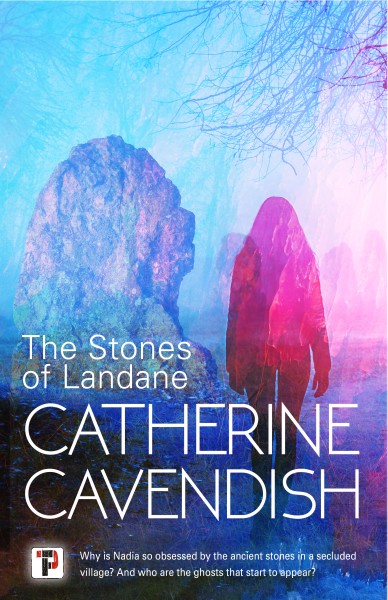
The Stones of Landane was published in January and is set in a village surrounded by ancient standing stones and a wider landscape that is also blessed with architecture from the prehistoric Neolithic age. Nadia is drawn to the stones in ways her boyfriend, Jonathan, learns to fear. But, as we discover, they are not the first to experience the high strangeness that has infested Landane for millennia…
Next year (2026), Flame Tree Press will be publishing a ghostly and Gothic novel of mine set in the Second World War. Ghosts of Chanterlands features a haunted house, ghosts from the past, and some creatures who are not what they appear to be.
I have also recently finished work on a novel set in Vienna – which is a city I find endlessly fascinating. its justly famed beauty conceals dark secrets, and there is truly a story on every street. Mine involves witches and, believe me, there is nothing sparkly about this coven!
 KANDISHA PRESS
Leave a comment