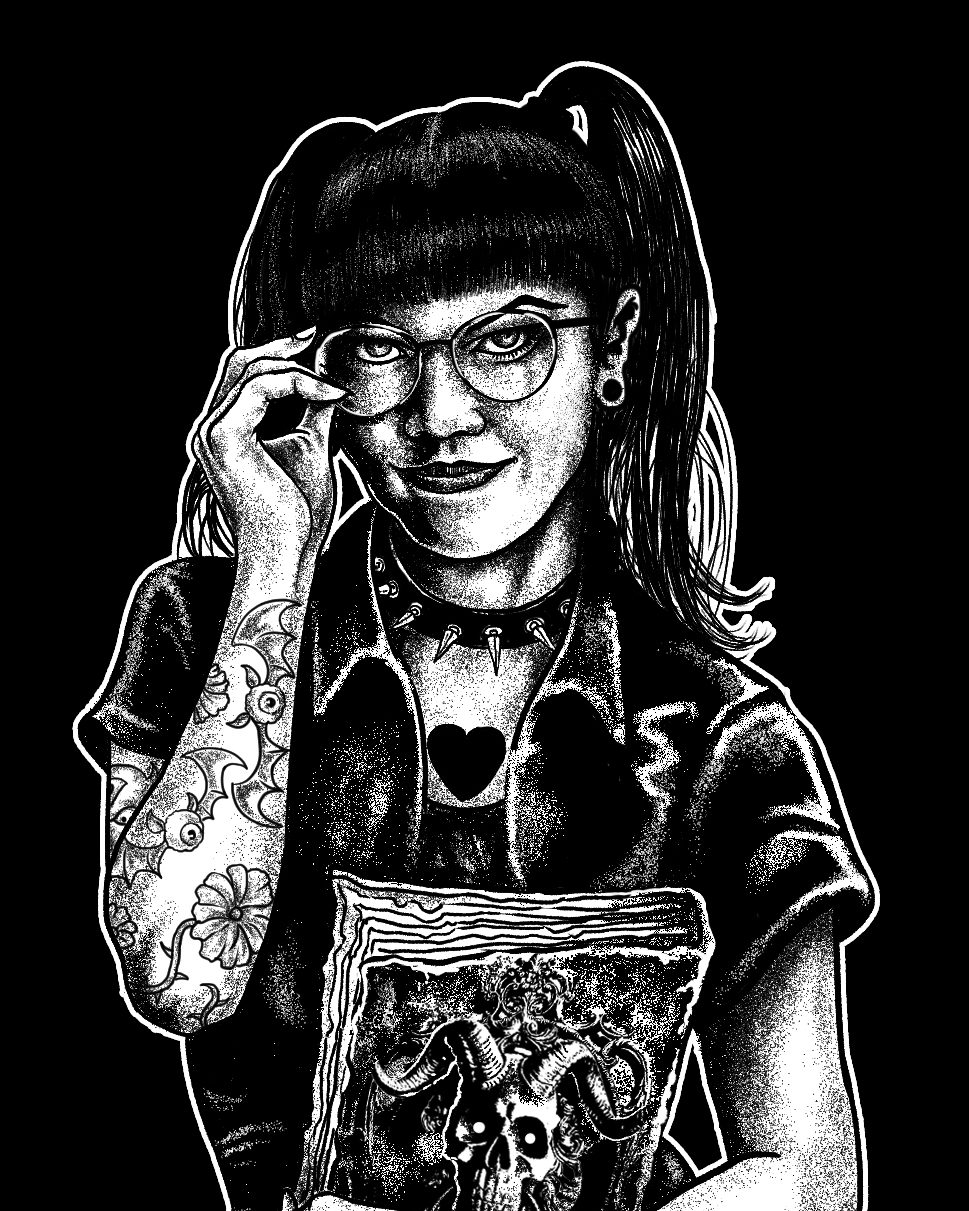

GREETINGS, BOOKWORMS! I’m Aisha Kandisha, Head Librarian at Kandisha Press. Join me in the dusty stacks of the library I will never leave again as I chat with some of my favorite Women in Horror. Today we feature author Christine A. Hart!

What do you believe are your strengths in writing? And when you feel you need to improve on a particular writing skill, how do you go about it?
Descriptive prose is probably my best skill as a writer. Well, I think that’s my strength. I sometimes struggle with depth for my seconary characters. I struggle with dialogue too. For both of those, I think a talented and experienced editor is the remedy. And for dialgogue, learning the craft of screenwriting has been educational. Screenplays lean heavily on dialogue, so you’re forced to keep thinking about giving your characters things to say that reveal who they are.
What are your thoughts on the book industry today, or more importantly, about the book community?
The book community is so much stronger and more accessible than it was when I started writing fiction. My first book, a speculative YA novel, was published in 2008 when I was 29. I was new to Facebook and I had a publisher that did most of the industry legwork for me, submitting it to review journals and for awards. I had no idea what they were doing or when.
Today, authors that can develop a presence on social media, access reputable reviews, get into libraries, and put their books in bookstores, even web-based ones, can compete with authors who have decades of experience. I won’t say that it’s a level playing field, because a solid reputation can’t be built overnight. But there are so many authors, editors, and book professionals that are welcoming and genuinely interested in helping new writers succeed.
I think we’ve mostly moved past the stigma associated with self-publishing – as far as readers are concerned. Authors themselves can still get in their own way. Now, authors who only want to work with traditional publishers, preferably big ones, will have a long road ahead (one that starts with the difficult process of getting an agent) and still may not end in publication. Each writer has to decide for themselves what kind of career they want, and where they are willing to compromise on that vision.
Do you feel it is getting harder or easier to make it as an independent author these days?
Currently, it’s easier to publish, but harder to earn money. I think a lot of self-published titles leave authors in the red, rather than cashing an advance cheque they won’t earn out. It’s energizing to know that you can make your dream of becoming a published author a reality. But if you do it properly, you’re going to invest quite a bit to get there. One of the reasons publishers are choosy about the manuscripts they accept is that they pay for several rounds of editing, a professional book cover, advertising, submission to awards, and so on. I feel like I’ve seen publisher investment reduced dramatically over the years, usually out of necessity in a changing industry. But for my part, if I’m going to pay a lot of those costs regardless, why wouldn’t I just cut out the middleman, at least some of the time? For example, alternating between self-publishing a book, to keep my work visible, and being traditionally published for greater reach.
Tell us about your work. What story are you most proud of?
I’ve had amazing and rewarding experiences over the years, but I think the story I’m most proud of is my MG retro sci-fi novel, The Electric Girl. It hasn’t won any awards or gotten rave reviews. Because I self-published (after seven titles through traditional houses) I savoured getting to choose my editor, book cover, promotions, and more. That said, if I hadn’t learned what I did through the first seven books, I wouldn’t have had the knowledge I needed to go out on my own.
What are your upcoming works and plans for the future?
I have a collection of adult short stories coming in 2026 with a working title, Weird Stories of Strange Women. They’re organized into Maidens, Mothers, and Crones, covering genres like folk and cosmic horror, magic realism, urban fantasy, science fiction, and alternate history. It might be my age or maybe it’s the current state of global affairs. I’ve been increasingly compelled to tell stories about women, for women, and see what happens from there.
I’m also doing a second edition of my NA sci-fi romance trilogy, The Variant Conspiracy. My publisher for these books announced last year that they were closing. As much as I loved working with that publisher, I knew immediately that it was an opportunity to fix some things about the series that I thought hadn’t worked well the first time. But this is a weird project to be doing right now. The premise for the series was, “What if the men destroying our world were doing it on purpose?” I wrote the books between 2012 and 2016 when dystopian YAs were in fashion. When they were published, we had just elected Trudeau here in Canada. Obama was still president in the US. And the world looked like it was sailing off to a stable future. Little did we know. So, it’s weird to be re-releasing this trilogy in 2025. But I couldn’t bring myself to let the series fade away.

 KANDISHA PRESS
Leave a comment