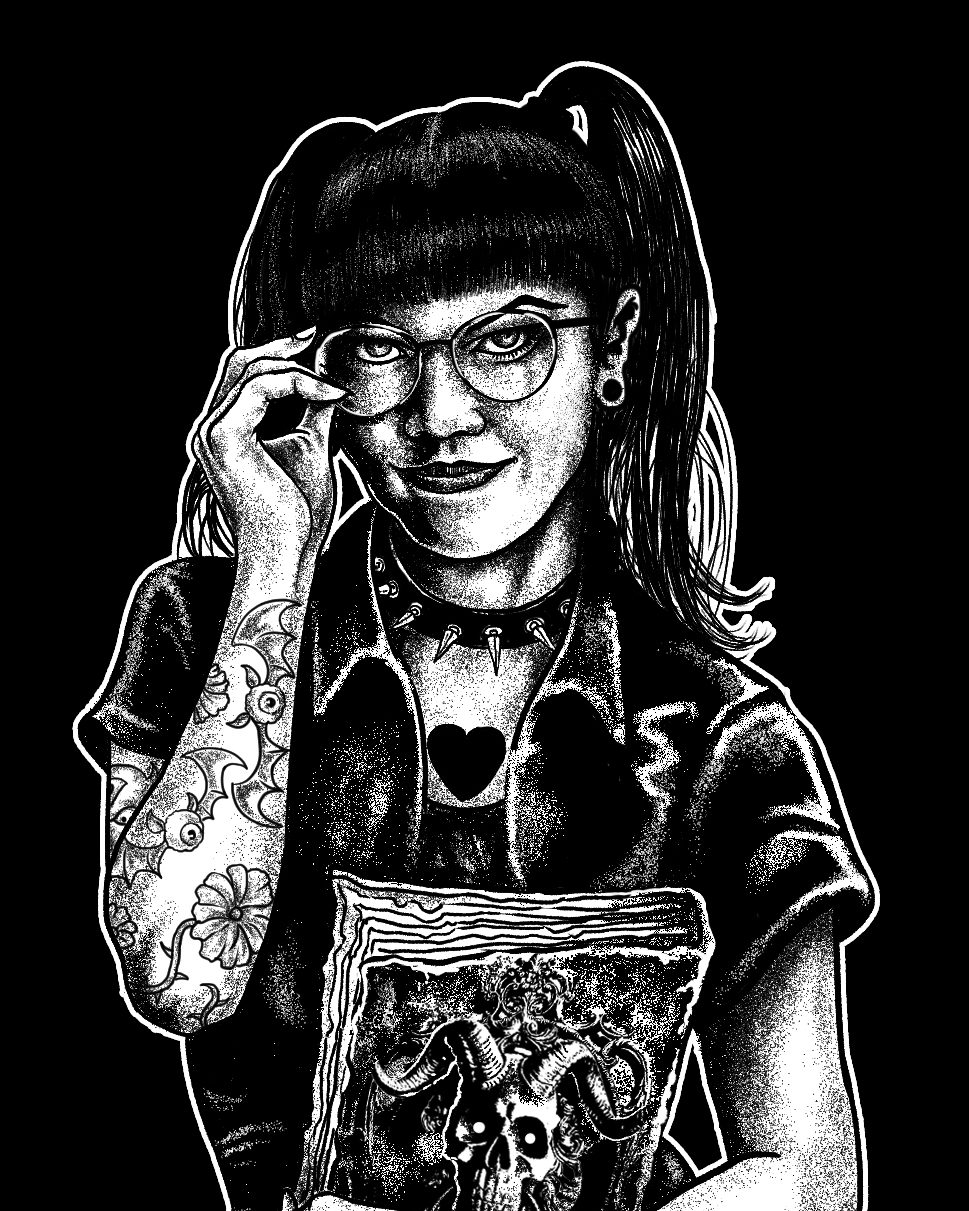

GREETINGS, BOOKWORMS! I’m Aisha Kandisha, Head Librarian at Kandisha Press. Join me in the dusty stacks of the library I will never leave again as I chat with some of my favorite Women in Horror. Today we feature author Kelsey Christine McConnell!

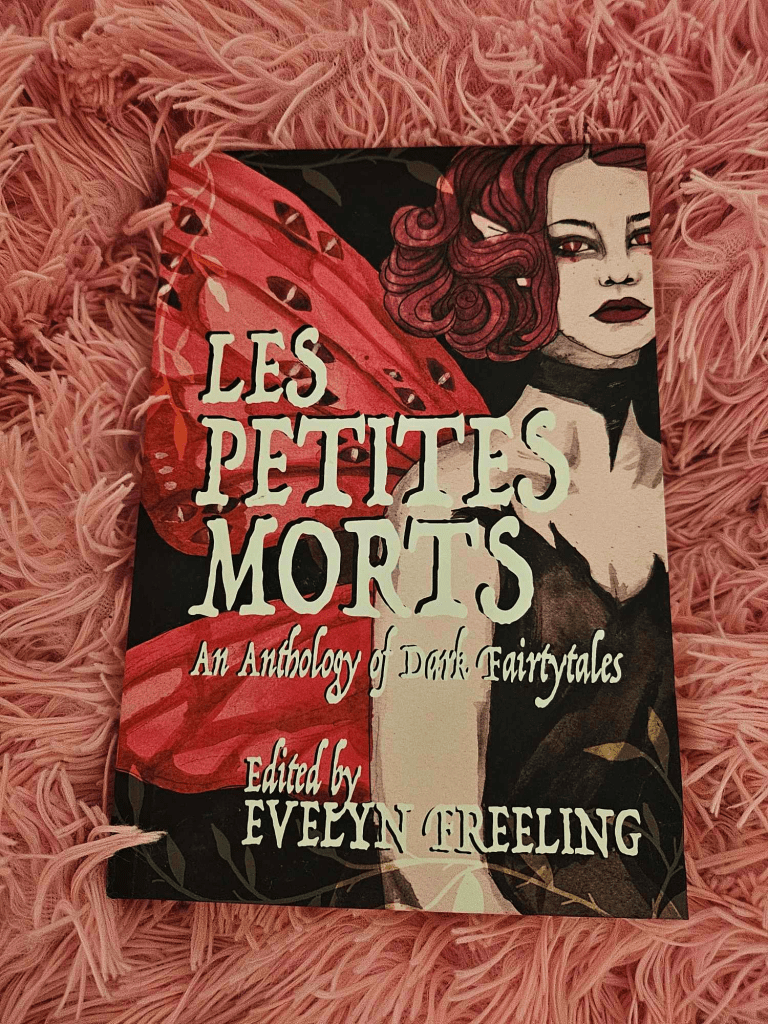
Kelsey Christine McConnell has a bachelor’s degree in Television/Film Production from SDSU and an MFA in Musical Theatre Writing from NYU. Furiously writing at night, she spends her days working as an Assistant Editor for the horror site The Lineup. She gets all of her best ideas from her sleep paralysis demon. Find her debut short story “A Greed of Flesh” in the erotic horror anthology Les Petites Morts from Ghost Orchid Press. Find her online at kelseymcconnell.com.
What do you believe are your strengths in writing? And when you feel you need to improve on a particular writing skill, how do you go about it?
My biggest strength, I think, is people-driven stories. When I start a story, a plot is more of a kernel or suggestion. I try to make really honest characters, and then I drop them into a concept and let them tell me where to take the story from there. It’s important to me that choices feel really authentic, and it’s important to me that characters make really imperfect choices, too. Doing the “right” or “correct” thing can not only be so boring, but is really divorced from the human experience. So, I guess, to make a long explanation short, my strength is empathy.
In terms of improving, let me tell you, I am so self-critical. I know the cliche (which is a cliche for a reason) is to always consume more books, because that’s the best teacher. I expand that to all kinds of media—movies, video games, comics, plays. I think living in as many stories as possible gives you a good handle on what you admire in other writers, and that really helps me hone my weaknesses. I’m also really vigilant about asking for feedback—and really encouraging writing groups and beta readers to go in hard on it. I’m definitely not a writer who likes compliment-only feedback.
When I’m really in a rut, I try to do the most off-the-wall, opposite thing to contrast the problem I’m having. The solution is usually found somewhere in the middle. (Or after a really long nap.)
What are your thoughts on the book industry today, or more importantly, about the book community?
I’m lucky enough that my 9 to 5 puts me in a position where I really get to see the best of the book industry. I think that there’s a broad perception that the book industry as a whole is a sinking ship, but the love and desire for books feels really alive and well to me. I think that the way people seek out books has become very different, and the risks publishers take on books has thinned out a bit. But I also see a lot of groundbreaking stories finding their moment.
I think sometimes for me being a part of the book community is a bit difficult, from a position as a writer. I—like I’m sure many writers are—am very introverted and get very wigged out putting myself out there, so it feels difficult breaking in, sometimes. From the outside, it’s easy to see a lot of negativity, in the sense that people are sharing their honest experiences, and those aren’t going to be 100% wins. So I think if you’re not really enmeshed in it, it can be really overwhelming. It can start to feel like competition, when it’s really not.
But seeing the book community from a reader standpoint is so encouraging. You see people who are embracing stories that never would have been made popular 10, 20 years ago. You see readers asking for more risks and building whole fandoms around books that would’ve gotten swallowed up without them.
Social media makes it really hard to stay positive sometimes, but if you know where to look, I think there’s a lot of hope left in the industry and community.
Do you feel it is getting harder or easier to make it as an independent author these days?
I think it’s easier in some regards and harder in others. I think there are a lot of great ways to seek out opportunities, and these opportunities are easier to access than ever. Plus, there are a lot of great communities offering support and encouragement to people who need to find and take a chance on those opportunities.
At the same time, I see how hard it is for a lot of indie presses, and when presses struggle, it means authors struggle. Beyond the economical issues, there have been so many instances of in-fighting, scandals, or just plain vanishing within the indie press community recently. I think it can be really intimidating for a lot of authors, and it makes it really hard not to horde your work and be overprotective. But there are a good plenty of presses out there that I personally trust and love. I think one of the biggest hurdles is just putting in the work to research and find your corner that you’re comfortable in.
Tell us about your work. What story are you most proud of?
Well, I’m still very much a baby in the publishing world. As of yet, I’ve only had one story published: “A Greed of Flesh” in the erotic horror anthology Les Petites Morts, edited by the wonderful Evelyn Freeling. It’s a short story I’m very proud of. It takes the Celtic myth of the Selkie, which were legends once used to profess the tragedies of forced marriage, and builds upon it to tell a more modern tale of tragic intimacies.
I’ve always been very drawn to folklore, myths, and fairytales, and finding the very human desperation at the center of them is at the heart of most of my work.
What are your upcoming works and plans for the future?
I have a few short story opportunities up in the air right now that I’m hoping come to fruition, but primarily I’m working on a novel that is so incredibly important to me. It’s an adaptation of the folktale of the Erlking, as popularized by the Goethe poem “Erlkönig.” My story takes this source material of a gloomy fae spirit bringing death to children and recontextualizes it to tell a story of adolescent sexual abuse. Rather than exploiting the physical terrors, I try to make the psychological horrors into a visceral, tangible thing, and play into that desperation in the myth that I mentioned before.
It’s a real labor of love, but I’m hoping to finish the first draft (which is really a Frankenstein of drafts 1 through 6.7 or so) this year.
 KANDISHA PRESS
Leave a comment