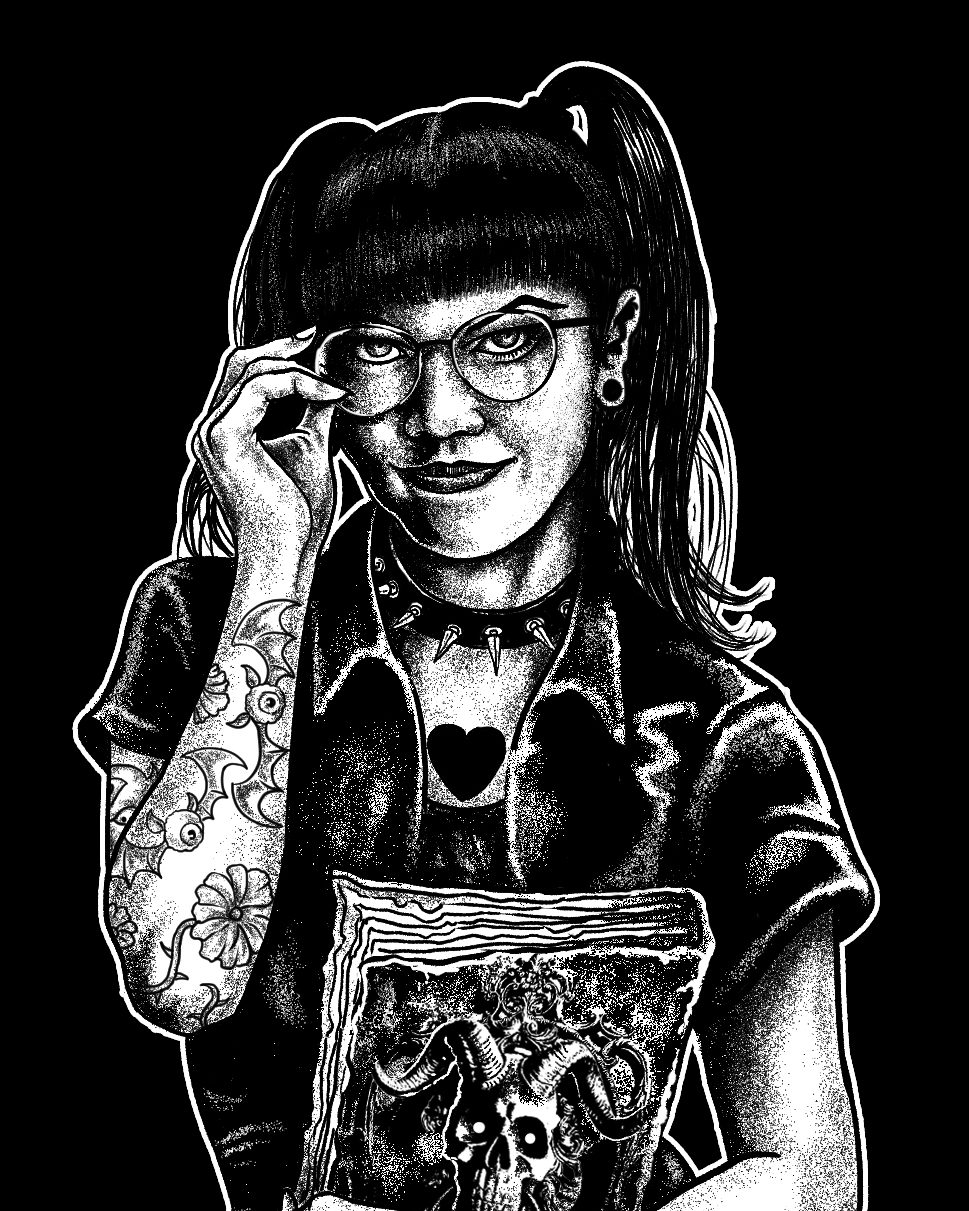

GREETINGS, BOOKWORMS! I’m Aisha Kandisha, Head Librarian at Kandisha Press. Join me in the dusty stacks of the library I will never leave again as I chat with some of my favorite Women in Horror. Today we feature author Cassandra O’Sullivan Sachar!

Cassandra O’Sullivan Sachar is a writer and associate English professor in Pennsylvania. She holds a Doctorate of Education with a Literacy Specialization from the University of Delaware and an MFA in Creative Writing from Wilkes University. She is the author of the Regal Summit Book Award-winning dark suspense novel Darkness There but Something More (Wicked House Publishing, 2024), the short horror story collection Keeper of Corpses and Other Dark Tales (Velox Books, 2024), the middle-grade mystery The Hidden Diary (Baynam Books Press, 2024), the horror novella Close the Door (Baynam Books Press, 2025), and the young adult thriller Lake of Secrets (Horrorsmith Publishing, 2025). Additionally, she is the Bram Stoker Award-nominated editor of the multi-author volume of horror scholarship No More Haunted Dolls: Horror Fiction that Transcends the Tropes (Vernon Press, 2024) and the editor (and contributing author) of Wicked Universe: A Wicked House Publishing Anthology (Wicked House Publishing, 2024).
What do you believe are your strengths in writing? And when you feel you need to improve on a particular writing skill, how do you go about it?
I believe I do well in blending the different elements of craft to create an immersive reading experience. When writing my rough draft, I focus first on taking a story to its completion, thinking about finishing my main character’s arc and including the right details to get there. But story and character aren’t enough, so I make sure to layer in setting to create a mood, and I tinker with dialogue so the different characters’ voices are both individualized and realistic. A playwright friend of mine told me she separates the dialogue of her characters to make sure that they sound like themselves and are consistent with vocal tics.
Revision is my favorite part of writing; I’m constantly looking to improve and love seeing a ho-hum piece come together. To me, generating the first draft is the hardest, but I love going back and making it better. One of my first sweeps is always for continuity, as it pulls me out of a story when I catch glaring errors. I take copious notes and write out timelines in an effort to reduce inconsistencies. I also look to eliminate unnecessary repetition at the word and sentence levels, rereading with this in mind and cutting the excess. Sometimes I need distance from my work, so I give it some time and let my brain work out plot points or problems like my tongue does to dislodge a poppyseed stuck in my teeth. One plus of overthinking everything is that my brain seems to know when something isn’t working and won’t rest until it comes up with an alternative. I also rely on the feedback of others to point out weaknesses, and then I try something different.

What are your thoughts on the book industry today, or more importantly, about the book community?
There’s a societal notion that we need to outpace the competition, but I think writers set themselves up for disappointment when they constantly focus on how they’re doing compared to everyone else. I definitely prefer the idea of being part of a writing community, and I feel extremely fortunate to be part of several different ones: the indie horror community, my cohort from my MFA program, and my cadre of creative writing faculty at my university. I love hearing about what my writer friends are doing—their new book releases, awards, and signings—and try to support them just as they support me. I also love working with other writers, whether that’s collaborating on an open mic event, inviting writers into my creative writing classroom to talk to my students, or working together on an anthology. I truly appreciate the consideration and advice I’ve received from writer friends when it came to such issues as dealing with harsh reviews or making choices about what publisher or marketing strategy to use. One of the most important pieces of advice I pass on to my students and other aspiring writers I meet is that there’s space for everyone, and becoming part of a writing community will help them improve their writing and gift them with opportunities.
Do you feel it is getting harder or easier to make it as an independent author these days?
I think that depends on what you think of as “making it.” I love how indie publishing provides space for so many talented authors whose work otherwise wouldn’t have a home, and I love that my weekends now frequently include setting up a table at different events and talking to strangers about books—both my own and those by other authors. I know that there’s more I could do to improve my writing career, but I also keep limits on the amount of time and money I can invest in my writing when I have additional priorities and responsibilities.
I think it’s best to measure one’s success not just by books sold but by the other experiences being a published novelist brings. For example, I walked out of my office building on a beautiful spring afternoon a few days ago and saw a student reading one of my novels as he sat on a bench. To me, in that moment, I felt like I was “making it” as an author, even though that was simply one person reading one of my books.

Tell us about your work. What story are you most proud of?
I write horror, mystery, and suspense for different audiences—middle grade through adult. I’m proud of all of my books for different reasons, but I’ll always hold a special place in my heart for my first published novel, Darkness There but Something More. The ideas for this storyline wouldn’t go away even though I had previously given up on my dream of becoming a published novelist after years of failed attempts. They kept divebombing me even though I tried to push them aside to focus on other work. Finally, I gave in, realizing that it was time to reignite my passion for creative writing. I ended up going back to grad school and getting my MFA so I could improve my craft and do the story justice, waiting to write even a single word of the manuscript until after I was more than six months into the program. With its dual timeline and need for research on serious subjects including child loss and sorority hazing, the writing process was fraught with challenges, but I stuck with it and underwent many layers of revision.
I’m most connected to this novel due to everything it represents to me, not just for bringing me back to my passion but because of the important themes represented as my main character picks up the pieces after enduring terrible hardships. I even got a tattoo of the raven from the cover—designed by the amazing graphic artist Christian Bentulan—to remind myself that there is always “something more” beyond the “darkness” life throws at us.
What are your upcoming works and plans for the future?
I’ve been working on a second collection of short horror stories, and I’m also planning to release some chapbooks. In addition, I have two calls for submission out on projects I’m curating and editing. One is a fiction anthology called Dark and Dreary: A Basement Horror Anthology, to be published with Screaming Scorpion Press (my brand-new publishing company), and the other is a multi-author volume of horror scholarship called From Foul to Fearful: Essays on Body Horror, to be published with McFarland & Company. Within the next year, I plan to open a call for submissions for full-length novels through Screaming Scorpion Press, but it’s important to me that I’m fully prepared for this step to best support my authors.
 KANDISHA PRESS
Leave a comment