
GREETINGS, BOOKWORMS! I’m Aisha Kandisha, Head Librarian at Kandisha Press. Join me in the dusty stacks of the library I will never leave again as I chat with some of my favorite Women in Horror. Today we feature author Cecilia Kennedy!

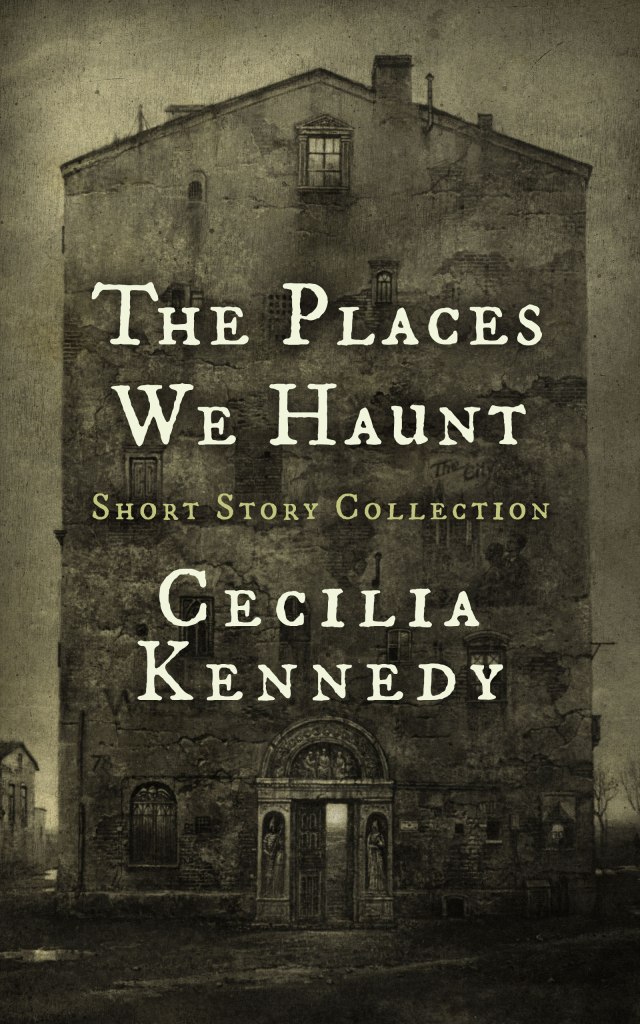
Cecilia Kennedy (she/her) taught Spanish and English composition/literature classes in Ohio for 20 years before moving to Washington state with her family in 2016. After moving, she experimented with writing short stories of fiction for the first time and discovered that she enjoyed the horror genre the best. The mountains, the Puget Sound, and the dark evergreen forests were—and still are—daily inspirations that provide joy as well as that speculative, “spooky” backdrop. While writing, she worked for a publishing company training writing tutors and tutoring students in English composition part time. She also started proofreading for Flash Fiction Magazine (which she still enjoys). Currently, she works full time as a copywriter for a pop-culture collectible toy company, but she still makes time to write flash fiction stories once a week, typically in the horror/speculative genre. Her works have been published in Maudlin House, Meadowlark Review, Rejection Letters, Vast Chasm Press, Tiny Molecules, Flash Fiction Magazine, Fiery Scribe Review, Trembling with Fear/Horror Tree, Coffin Bell, Headstuff, Kandisha Press, Ghost Orchid Press, Potter’s Grove Press, DarkWinter Press, and others. She is a 2022 Sundress Publications Best of the Net (BOTN) nominee and a 2023 Pushcart Prize nominee. In addition to writing horror, she enjoys writing humorous essays. She served as the adult beverage columnist for The Daily Drunk (a pop-culture/humor literary magazine) and posts weekly on her humor DIY blog, Fixin’ Leaks and Leeks. You can find her on X: @ckennedyhola, Instagram: @ceciliakennedy2349, Facebook.
Websites:
Author: https://ckennedyhola.wixsite.com/ckennedyportfolio
Blog: https://fixinleaksnleeksdiy.blog/
What made you want to become an author? Did you have an “Aha!” moment when you knew you were born to write? Or perhaps a beloved book inspired you?
A Holly Hobby typewriter was one of the most memorable gifts I ever received as a child. I had a difficult time writing my name when I was young, but on that typewriter, I could pound out my own name over and over again with ease—and I loved it! I just knew that I wanted to spend a lot of time typing anything that came to mind. (Nowadays, though, I usually write my stories or a kernel idea by hand first.) I also spent a lot of time outside making up stories as I played, so anything that involved inventing new characters or scenes or imagining was something I gravitated towards. Years later, I wanted to be a journalist, so I drove to the local newspaper office in town as a senior in high school and told the managing editor I wanted to work there after school. He hired me on the spot, and I kept the job through most of college. I later majored in English and Spanish and taught composition and literary analysis in both languages at the university level for 20 years before moving to Washington state, where I finally picked up fiction/horror writing. Since 2017, I’ve been writing short stories and flash fiction in the speculative/horror genres. I’ve also switched from a career involving academic writing and research to one in marketing/copywriting/advertising.
What do you believe are your strengths in writing? And when you feel you need to improve on a particular writing skill, how do you go about it?
I love a good opening line, so I take my time crafting something different and eye-catching. Endings are harder for me, but I’ve started writing an entire plot/kernel idea in one or two sentences before I begin. I ask myself: How does this end? What’s the image I want to end with? And then I work backwards from there. When I feel I need to improve on a writing skill, I read as much as I can about the craft. I’m also a proofreader for Flash Fiction Magazine, so I get to read a number of incredibly inspiring stories each week—and I get to talk to other editors at the magazine and read craft articles they create for authors who want to improve their work.
What are your thoughts on the book industry today, or more importantly, about the book community? Do you feel it is getting harder or easier to make it as an independent author these days?
I love that there are so many ways to be published these days. Good, quality editors and presses exist on the independent market, and they’re paying attention to the craft of writing and producing exciting things. I always thought I’d “make it” if I had an agent or submitted to the top presses in the world, but the truth is, I’m so impressed by the small presses and editors that I haven’t even tried to get agented. I have no desire. That’s not to say that it’s not hard making it as an author. Publishing the book is half the battle. The major work begins in terms of marketing and publicity, but even traditional publishers are facing those difficulties as well. I’ve always just been happy to have a book out there—and for someone to read it—and to know that a good editor, who has my best interests in mind and gives freely of their time, talent, and treasure, has seen it through the process of publication. And I’m so lucky to have found that twice for two different short-story collections with two different editors (River Dixon, Potter’s Grove Press & Suzanne Craig-Whytock, DarkWinter Press).
Tell us about your work. What story are you most proud of?
Twenty-Four-Hour-Shift: Dark Tales from on and off the Clock is a collection of short stories in the horror genre. This collection includes fictional short stories of work-related haunts and happenings, but also dark stories that explore relationships between friends and family members off the clock. The collection includes horror-comedy as well as strange and unsettling tales. What’s also interesting to note is that John Skewes, an artist whose career includes working for Disney and creating award-winning children’s books with illustrations, did the front cover. In this case, the cover is a clever, horrifying story in just one image. I think my favorite story in the bunch is “Photo Shoot with Possessed Bunnies,” but I also just reread “Passing Lanes,” and I enjoyed the images and the way the story flows all over again.
What are your upcoming works and plans for the future?
I still write a short story a week and submit to literary magazines. My short stories are becoming even shorter these days: 300-500 words or so, but condensing a story really makes me think about what’s essential in terms of plot, structure, and language. A few short stories that I’ve written could be turned into one full novella or full-length work, so I might get started on that idea, but I’m not going to pressure myself into finishing a full-length work this year. However, I will still write every day because I love it—and it’s my job!
 KANDISHA PRESS
Awesome interview with one of the best women horror writers I know!
LikeLike